
Cockroach Janta Party Jantar Mantar Protest Overnight Standoff Over NEET Paper Leak Disruption Explained
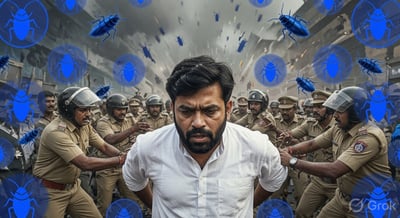
A tense standoff has unfolded at Jantar Mantar in New Delhi as the newly emerged youth movement known as the Cockroach Janta Party refused to vacate the historic protest site. The demonstration began on June 20 2026 to demand the immediate resignation of Union Education Minister Dharmendra Pradhan following the massive National Eligibility cum Entrance Test undergraduate paper leak controversy. Led by its founder Abhijeet Dipke the youth group converted a standard 1 day rally into an unprecedented overnight sit in despite explicit orders from the Delhi Police to clear the area after the official 5 pm deadline. As darkness fell over the capital the protest site transformed into a heavily guarded zone with over 200 security personnel from the local police and the Rapid Action Force monitoring the demonstrators.
The friction reached a critical point during the night when the demonstrating youth alleged that authorities had deliberately disconnected electricity and cut off the water supply to public restrooms in an attempt to disperse the gathering. Despite these challenging conditions the protesters held their ground banging steel plates and spoons while chanting anti government slogans to maintain momentum. Activists argue that resorting to basic administrative disruptions like cutting water access to peaceful student protesters reflects poorly on the state machinery and only deepens public anger. On the other hand administrative sources maintained that the enforcement of timelines is a standard public safety measure meant to prevent unregulated overnight gatherings in high security urban corridors. The refusal of the students to back down indicates a fundamental breakdown in dialogue between the youth and the educational leadership.
The Cockroach Janta Party which originally began as a satirical digital campaign responding to controversial remarks about unemployed youth has rapidly transformed into a major vehicle for student grievances. Prominent national figures including climate activist Sonam Wangchuk have joined the demonstrations at Jantar Mantar to show solidarity with millions of students whose academic careers face severe disruption. Wangchuk issued a formal warning stating that he would launch an indefinite hunger strike on June 27 2026 if the central government fails to fix systemic accountability within the testing framework. By framing their protest around the tragic suicides of distressed aspirants and demanding a compensation package of 1 crore rupees for affected families the group has successfully moved the conversation beyond a simple administrative error into a broader debate on structural reform and political accountability.
As the protest enters its consecutive second day the crowd continues to swell with competitive exam aspirants joining the venue directly after completing their rescheduled evaluation tests. The state administration now faces a delicate choice between using tactical physical force to evict the remaining demonstrators or engaging in formal dialogue with a decentralized youth leadership. Utilizing hard security measures against students protesting a verified examination failure carries a significant risk of generating wider national backlash and intensifying political opposition from regional parties. Ultimately the unfolding crisis at Jantar Mantar demonstrates that superficial administrative containment cannot resolve a crisis of institutional trust and a transparent resolution is necessary to restore faith in the country competitive education system.