
Stanford Graduation Disrupted As Hundreds Of Graduates Walk Out During Sundar Pichai Keynote Address
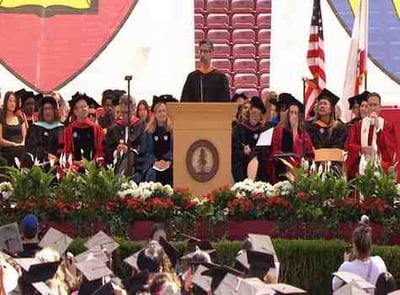
A high profile celebration turned into a site of intense political activism at Stanford Stadium on Sunday, June 14, 2026. As Google and Alphabet CEO Sundar Pichai took the stage to deliver the keynote commencement address to nearly 6000 degree recipients, a large faction of the graduating class staged a highly coordinated walkout. Moments after Stanford President Jonathan Levin introduced Pichai, praising his leadership and humility, a wave of boos echoed from the stands. Approximately 200 students stood up from their seats, donned traditional Palestinian keffiyehs, raised banners, and began marching out of the venue. The demonstration, which had been planned weeks in advance, effectively disrupted the celebratory atmosphere of the prestigious event, forcing attendees and families to witness a sharp public rebuke of one of Stanford most prominent alumni.
The core grievance fueling this massive student walkout is Google direct involvement in Project Nimbus, a controversial 1.2 billion dollar cloud computing and artificial intelligence contract signed jointly with Amazon and the Israeli government in 2021. Organizing bodies, including Stanford Students for Justice in Palestine and the No Tech for Apartheid campaign, openly criticized the tech giant for providing advanced digital infrastructure and surveillance capabilities to the Israeli military, particularly during the ongoing conflict in Gaza. Protesting students carried Palestinian flags and chanted slogans like Free, free Palestine as they exited the stadium gates. In an official statement released before the ceremony, student organizers declared that the university community did not need another tech billionaire instructing them how to profit off corporate contracts linked to global warfare, arguing that academic institutions must distance themselves from military tech funding.
Despite the highly visible exit and the loud chanting of protesters, the tech executive remained largely unfazed and proceeded with his conventional commencement speech. Interestingly, Pichai skipped any deep discussion about artificial intelligence, a topic that has famously drawn heavy backlash and boos for other tech leaders on college campuses this graduation season. Instead, he lightheartedly acknowledged that people had given him plenty of advice on what not to say, hinting at the last 2 letters of his last name, AI. Delivering a message focused entirely on personal resilience, Pichai urged the remaining crowd to choose optimism when facing global hardships. He shared moving details about his own past, recalling how his father had to sacrifice an entire year salary back in Chennai just to purchase his very first airplane ticket to come study at Stanford in 1995.
While the majority of the graduating class chose to stay in their seats to complete the traditional ceremony, the immediate aftermath of the walkout revealed deep divisions within the corporate and academic worlds. Following the main event, a BBC journalist approached Pichai outside the stadium to ask for his reaction to the hundreds of protesting graduates, but the CEO refused to comment and walked away silently. Meanwhile, prominent Indian American venture capitalist Vinod Khosla took to social media to heavily criticize the demonstrating students, calling their actions biased, idiotic, short sighted, and deeply selfish for ignoring how Google technology benefits billions of people globally. The protesting graduates eventually gathered under nearby campus trees to hold an alternative event termed the People Commencement, demonstrating that the intersection of big tech corporate ethics and campus activism will continue to challenge institutional leadership.