
Congress Alleges ‘RSS Employment Scheme’ as Centre Opens Census Enumerator Posts to Private Individuals
The Union government's recent overhaul of the Census Rules, 1990 has sparked a contentious political row, with the opposition Congress party accusing the ruling establishment of engineering an "RSS employment scheme" under the guise of administrative necessity. By formally amending Section 18(1) of the Census Act, the Centre enabled state governments and Union territory administrations to draft staff and teachers from aided and unaided private institutions, trusts, societies, and "any other person deemed suitable" into official enumeration duties—breaking sharply from the long-standing convention of relying primarily on permanent government teachers, municipal clerks, and public servants.
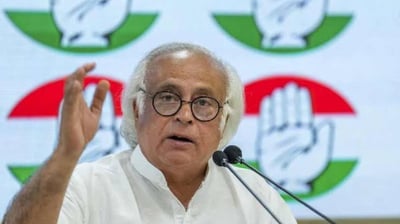
Leading the charge, Congress general secretary in-charge communications Jairam Ramesh labeled the policy revision a "Rozgar Guarantee Yojana" explicitly designed to induct thousands of Rashtriya Swayamsevak Sangh (RSS) and Bharatiya Janata Party (BJP) workers into the country’s statistical machinery. Ramesh linked the regulatory shift to an RSS cadre conclave held in Belgaum earlier in the year that focused on Census strategy, alleging that outsourcing data collection threatens to doctor demographic figures and compromise the non-partisan integrity of the decennial headcount.
Defenders of the administrative change and former Census officials have countered that the expansion was driven by operational bottlenecks on the ground. With large numbers of government teaching positions remaining vacant across several states, and multiple high court orders shielding public educators from excessive non-academic duties, authorities argued that the traditional public-sector pool fell short of the manpower needed to conduct a door-to-door headcount for a population exceeding 1.4 billion. Officials maintain that all appointed enumerators remain bound by statutory confidentiality rules under the Census Act.
Statistical experts and transparency advocates, however, caution that substituting accountable civil servants with private contract individuals introduces significant institutional vulnerabilities. Unlike permanent government employees who face strict disciplinary service codes and administrative penalties for bias, deploying private personnel creates real risks of data distortion and inconsistent coverage in sensitive demographic categories. Coming at a time when administrative data verification exercises are already facing intense public scrutiny, opening sovereign statistical operations to discretionary private hiring risks turning an essential governance exercise into a prolonged battle over institutional credibility.