
Imran Khan Asked To Leave India Following Mumbai Protest Against Election Commission Chief: Why Does Modi Government Try To Save Gyanesh Kumar?
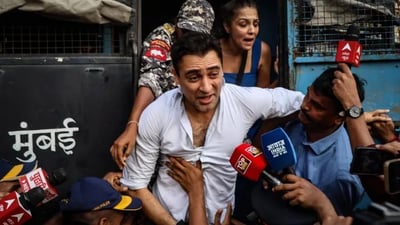
Bollywood actor Imran Khan has run into serious trouble with immigration authorities after taking part in a public demonstration in the heart of Mumbai. The film star has been handed an official departure order directing him to pack his bags and leave the country within days. Official agencies took this extreme step because the actor holds an American passport, even though he has spent his entire professional life working in the Indian entertainment world. Authorities maintain that foreign nationals cannot take part in domestic political rallies or agitations against public bodies.
The incident began when the actor arrived at the historic August Kranti Maidan ground in Mumbai to join a crowd of people protesting against the Chief Election Commissioner, Gyanesh Kumar. The public gathering was organized to express deep anger over alleged voter list manipulations and serious discrepancies in the electoral records. Citizens and activists had gathered peacefully to question the transparency of the electoral system and demand fair democratic procedures. The presence of a familiar Bollywood face quickly drew heavy attention from the crowd and security personnel on the ground.
Police personnel stationed at the venue moved swiftly to control the assembly and took several individuals into custody, including the actor. He was held briefly by the Mumbai Police before being allowed to go. However, political leader Kirit Somaiya soon filed a formal police complaint regarding the matter. Somaiya claimed that because the actor holds foreign citizenship, he has no legal standing to join public rallies or criticize constitutional officers on Indian soil.
Following the complaint, the matter was immediately referred to the Foreigners Regional Registration Office, the central body that monitors foreign visitors and long-term overseas cardholders. Officials checked government records and confirmed his legal status as a United States citizen carrying an Overseas Citizen of India registration card. Citing strict rules under the Foreigners Act, the authorities issued a formal notice requiring him to leave India on or before October 28.
The harshness and speed of this government action have raised sharp questions across the political spectrum. Many critics and opposition leaders are now openly asking: Why does the Modi government want to save Gyanesh Kumar from public scrutiny and accusations of election fraud? Rather than investigating the serious complaints about deleted voter names and manipulation of voter rolls, government agencies have directed all their force against protesters and high-profile figures who questioned the system. Observers argue that using deportation laws against a peaceful attendee looks like an attempt to silence uncomfortable questions about the credibility of the Election Commission.
Many ordinary citizens are often unaware that Imran Khan is not an Indian citizen by law. He was born in the United States, giving him American citizenship by place of birth. Even though his family has deep roots in Indian cinema, he never took up Indian nationality. Like many people of Indian origin, he holds an Overseas Citizen of India card. This status allows lifelong travel, residency, and business activity in India without a visa, but it does not grant citizenship rights.
The legal distinction between full citizens and overseas cardholders is clear under Indian law. Cardholders are not permitted to vote, run for office, or hold constitutional posts. Basic political freedoms guaranteed to citizens, such as the constitutional right to assemble and hold protests against the government, are strictly reserved for Indian passport holders. Authorities argue that any foreign national who participates in public political protests violates their residency conditions, giving the government power to end their stay.
Before the notice was served, the actor explained why he attended the gathering at the ground. He stated clearly that he did not represent any political organization or group. He described himself as a regular person who has lived in Mumbai his whole life and cares about what happens in his city. He expressed concern over why regular citizens were being blocked from moving freely and why legitimate public voices were being held back. In his words, he was simply standing with fellow residents who want honesty and fairness in public institutions.
Government authorities have maintained that personal feelings do not override immigration rules. From the perspective of the administration, targeting the head of the Election Commission crosses a clear boundary for non-citizens. Officials stated that foreign guests must follow the rules of their stay and not get involved in domestic political conflicts.
The actor is now preparing a legal fight against the departure order before the deadline passes. Legal representatives are moving the Bombay High Court to demand immediate protection and put the exit notice on hold. His lawyers will contend that merely standing at a public spot without violence does not amount to illegal political meddling, and that forcing someone out of their lifelong home over a peaceful presence is entirely disproportionate.
This dramatic incident has turned into a major national conversation about both the rights of overseas Indian residents and the transparency of election machinery in the country. The central question remains whether a resident can be thrown out for standing up against institutional wrongdoing, or if the court will step in to protect basic civil freedoms.