
Consumer Court Orders Massive 20 Lakh Refund After E20 Petrol Destroys Car Engine
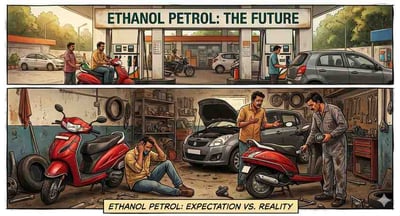
A major legal precedent has been established for millions of vehicle owners across the country as a consumer court delivered a landmark verdict against the largest car manufacturer in India. On July 14, 2026, the Raipur District Consumer Disputes Redressal Commission in Chhattisgarh ruled directly in favor of a car owner who asserted that modern E20 ethanol blended petrol caused catastrophic and irreversible damage to his premium vehicle. The complainant, Dr Premraj Devta, had purchased a brand new Maruti Grand Vitara Strong Hybrid Zeta Plus in January 2023, expecting a flawless driving experience from the advanced engineering system. However, shortly after regular refueling with the newly introduced E20 petrol, the vehicle began experiencing severe mechanical issues including persistent engine misfiring, sudden stalling in heavy traffic, a radical drop in fuel efficiency, and overall poor road performance. Despite making dozens of stressful visits to authorized service centers for fuel tank cleaning, part replacements, and repeating mechanical tune ups, the authorized technicians completely failed to resolve the core issues, leaving the frustrated consumer with massive out of pocket repair bills for a practically unusable machine.
The judicial panel, led by commission chairman Prashant Kundu and member Dr Anand Verghese, thoroughly reviewed the extensive repair logs and issued an uncompromising directive against Maruti Suzuki and its local dealership. The consumer court officially ordered the automotive giant to replace the damaged vehicle with a completely new, fully E20 compatible model of the exact same variant within a strict timeline of 45 days. Should the manufacturing company fail to deliver a replacement vehicle within this period, they are legally bound to issue a complete financial refund of the entire purchase amount to the aggrieved buyer. The court calculated the total direct refund package at a substantial 20.50 lakh rupees, which includes 18.29 lakh rupees for the base cost of the vehicle, 1.86 lakh rupees to cover the official Regional Transport Office registration fees, and 34644 rupees to compensate for the insurance premium paid by the client. Furthermore, the judges awarded an additional 1 lakh rupees as direct compensation for the severe mental agony and harassment suffered by the family, along with 10000 rupees to cover their legal litigation expenses, warning that a failure to pay on time would trigger a 7 percent annual interest penalty.
The legal proceedings exposed a deep division between corporate defense claims and the daily operational realities experienced by regular motorists on the ground. During the formal trial, the legal team representing the car manufacturer aggressively disputed the allegations, arguing that the hybrid model was thoroughly tested and certified as fully compatible with E20 blended fuel from the factory. The corporate defense tried to shift the blame onto the consumer, asserting that the engine failures and declining operational efficiency were likely caused by a lack of routine vehicle maintenance, external environmental factors, or ordinary mechanical wear and tear rather than the chemical composition of the fuel itself. However, the consumer forum completely rejected this corporate defense, noting that the sheer frequency of the breakdown logs proved the client was dedicated to maintaining the vehicle through official channels. The judges made a profound social observation, stating that since E20 petrol has rapidly become the default option at nearly 100 percent of fuel stations nationwide, ordinary citizens have absolutely no alternative choices at the pump and cannot be penalized for using the only fuel supplied to the public market.
This groundbreaking verdict arrives during a period of intense nationwide anxiety regarding the rapid implementation of the national biofuel blending program, which advanced its aggressive target of 20 percent ethanol blending to reduce foreign oil dependency. While policymakers and government ministries continue to defend the eco friendly transition by citing benefits to local agricultural waste processing and lower carbon emissions, a rising number of daily commuters have stepped forward to report sudden engine degradation and dropping mileage statistics. By legally identifying this scenario as a severe deficiency of service and an unfair trade practice, the judiciary has effectively protected the rights of the common consumer, shifting the massive financial burden of fuel compatibility testing squarely onto the shoulders of major manufacturing corporations. This ruling will undoubtedly force the entire automotive industry to re-evaluate their engineering standards, ensuring that future engines can genuinely handle heavy chemical blends without offloading the hidden costs of mechanical breakdown onto the unsuspecting public.