
Cyber Fraud Scam Worth 28000 Crore Leads To Arrest Of Advocate At Mumbai Airport By Enforcement Directorate
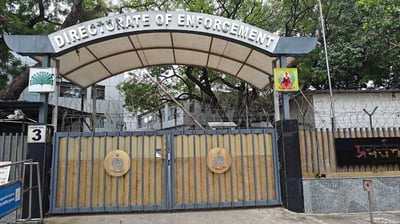
An advocate has been taken into custody by federal financial investigators at Mumbai international airport in connection with a massive nationwide cyber fraud operation that processed transactions worth twenty-eight thousand crore rupees. The Enforcement Directorate unit based in Goa intercepted the lawyer just as he was about to board a domestic flight headed for New Delhi. Security officials from airport customs and airport security teams assisted the agency in tracking down the individual before he could enter the airplane. The dramatic detention marks the seventh arrest made in an expanding investigation into complex illegal networks that cheat citizens through fake police calls and unlawful fund transfers.
The arrested lawyer has been identified as Rashesh Upadhyay, who also used the alias Rashesh Shah. Following his capture at the airport terminal, officials took him directly to Panaji and produced him before a special anti money laundering court. The court granted investigators custody of the lawyer for several days so they can question him in detail about how stolen money was moved and hidden. Federal officers described him as a central figure in helping the criminal network survive legal trouble by misusing his position to protect secret bank accounts.
The entire investigation began from a single police complaint registered in Goa after an elderly woman lost over two and a half crore rupees to online fraudsters. The criminals kept the woman under intense psychological fear for nearly two weeks through continuous video and voice calls, a tactic commonly known as digital arrest. The fraudsters claimed to be high ranking police officers and threatened her with immediate imprisonment unless she emptied her life savings. Under panic, she transferred money across multiple accounts that were secretly controlled by the criminal ring.
When money laundering investigators started tracing that stolen money, they discovered an astonishingly large financial web. The criminal operation was not just a small group of online thieves, but a giant organization using around four hundred fake bank accounts registered under dummy directors. These accounts were created in the names of fake companies pretending to deal in travel services, commodity sales, and foreign currency exchange. The total volume of money moving through these suspicious accounts reached twenty-eight thousand crore rupees, with nearly three thousand crore rupees deposited directly as hard cash.
Investigators found that whenever ordinary citizens realized they had been cheated and complained to local police stations, banks would freeze the suspect accounts. This is where the arrested advocate allegedly played his role. Instead of representing people openly in court, the lawyer allegedly worked behind the scenes to get frozen bank accounts released through backchannel payments. The agency discovered that while he held a legal license, he had never officially submitted formal court papers or represented the accused companies before any judge.
According to the findings presented before the court, the lawyer allegedly arranged bribes for corrupt lower level officials to remove restrictions on blocked accounts. To keep the transactions hidden from regular banking checks, the bribe money was sent through informal cash networks known as Angadiyas. These traditional cash couriers operate outside the banking system, allowing large sums of paper money to move between cities without creating an electronic paper trail. Once the accounts were unfrozen, the fraud gang quickly withdrew the remaining funds in cash and converted them into foreign currency through money exchange businesses.
The scale of the crime stretches across the entire country, affecting people in twenty states and union territories. Accounts connected to this single network have appeared in more than three hundred formal citizen complaints and over one hundred and sixty police first information reports, with direct citizen losses adding up to more than four hundred crore rupees. Central agencies are now working to identify every government staff member who took bribes to release these accounts, as well as the cash handlers who carried the payoffs across state borders.
Law enforcement authorities have repeatedly reminded the public that no police department, court, or investigative bureau in the country has the power to place someone under digital arrest. Real police officers never ask citizens to transfer money into private bank accounts over video calls to clear their names. Citizens who receive threatening calls from strangers claiming to be law enforcement are advised to cut the call immediately and report the incident to the official national cyber helpline or the central online reporting portal.