
Neha Bora Rejects Peace Bond Demand Following Delhi High Court Setback Calling Preventive Notice Direct Attack On Democratic Dissen
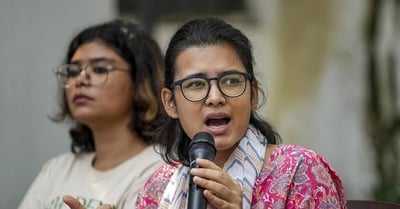
Student activist and All India Students Association national president Neha Bora has firmly rejected a police demand to sign a financial peace bond, describing the administrative order as a direct effort to crush democratic protest. Her statement came shortly after the Delhi High Court declined to cancel a notice issued by a special executive magistrate that asked her to deposit money and provide guarantees for maintaining public order. While appearing before the magistrate court at the Mandir Marg police station, the student representative stated that she would not agree to any conditional undertakings that treat peaceful public gathering as a law and order threat.
The legal dispute began when the national capital police initiated preventive security proceedings against the student leader following recent public demonstrations. Law enforcement authorities issued an official notice ordering her to show cause why she should not be made to submit a personal bond of ten thousand rupees along with a local surety to ensure peace. The police action was linked to a demonstration march organized in central Delhi, where students and youth groups gathered to raise slogans and carry the national flag. Police claimed the gathering violated local prohibitory orders and accused the student activist of instigating people to gather at public spaces without administrative clearance.
Following the police notice, the student leader approached the high court seeking immediate cancellation of the magistrate summons. Her legal team argued that the notice was vague, lacked supporting factual material, and failed to explain how holding a peaceful national flag march created a danger of public violence. The petition contended that the preventive legal clauses under the new criminal procedure code were being turned into political tools to block citizens from exercising their constitutional freedoms of speech and peaceful assembly.
The high court reviewed the preliminary petition and decided not to quash the proceedings at this early stage, observing that the executive magistrate had the legal authority to conduct an inquiry into public peace concerns. However, the court did not give an unconditional green light to the police actions. The bench instructed the magistrate to provide all case papers, witness statements, and related materials to the student leader so that she could read the exact allegations and present a formal response. The court also directed the magistrate to examine whether demanding a financial bond during the preliminary stage of an inquiry was legally justified under the procedural code.
During the hearing before the special executive magistrate on October 25, the court complied with the high court directive by sharing the case documents with the defense counsel. After receiving the case files, the magistrate granted time to the student leader to prepare her formal written statement, scheduling the next proceeding for October 29. The defense team maintained that they would fight the charges through established legal methods, pointing out that citizens do not need prior government permission simply to raise the national flag in public spaces.
Outside the police facility, the student leader addressed supporters and reporters, asserting that signing a peace bond would mean accepting guilt for actions that are entirely lawful under the Constitution of India. She questioned why student activists are labeled security hazards for questioning government policies, while aggressive groups shouting slogans outside police stations face no preventive police action. Student organizations across Delhi have voiced solidarity with her position, warning that using executive bonds against student union representatives creates a dangerous precedent that turns routine civic activism into criminal misconduct.
Legal commentators and civil liberties groups have frequently raised concerns about how local police forces deploy preventive legal provisions against political activists, trade unionists, and student leaders. Unlike regular criminal trials that take place before independent judicial magistrates, preventive proceedings are conducted by executive police officers who act as magistrates. Critics argue that this arrangement gives police excessive power to monitor critics, impose heavy bail conditions, and threaten people with jail time without proving that any real crime took place.
The standoff now moves to the October 29 hearing, where the student leader will submit her formal reply to the police allegations. Student groups have announced plans to hold awareness meetings across university campuses to discuss the issue of preventive police notices. As legal arguments prepare to resume before the magistrate, the case continues to draw attention as a major test of how far state authorities can use executive peace bonds against non violent youth protests.