
Cyber Police Book Four Influencers Over Misleading Videos Targeting Nitin Gadkari On Ethanol Fuel
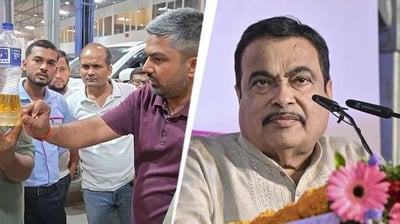
The ongoing national debate over the transition to green energy has taken a sharp legal turn in Maharashtra. On Monday, July 13, 2026, the Nagpur City Cyber Police officially registered an FIR against four prominent social media influencers for circulating allegedly false, misleading, and defamatory content. The targeted videos focused on Union Road Transport and Highways Minister Nitin Gadkari and his strong advocacy for E20 petrol, which is a mix of 20 percent ethanol and 80 percent traditional petrol. The police action was initiated following a formal complaint lodged by Shishir Arun Tripathi, the city convener of the Bharatiya Janata Party social media cell. According to the complaint, the creators used their digital reach to spread panic regarding the safety of ethanol-blended fuel, directly linking the policy to Gadkari in a malicious manner to damage his public reputation.
Among those named in the police case is Bihar-based YouTuber and politician Manish Kashyap, who uploaded a detailed video on July 3, 2026, criticizing the fuel transition. The other three accused content creators are the administrator of the Instagram page Desi Boys NCR, Harshit Rathi, and Anklesh Inwati. The complainant alleged that while Kashyap circulated highly inaccurate technical data about E20 fuel to mislead viewers, the other three creators went further by using highly abusive and derogatory language against the Union minister. These actions, the complaint stated, were not merely innocent reviews but a coordinated attempt to incite public anger, disrupt local peace, and defame a public representative. The cyber police have registered the case under Sections 356, 352, and 296 of the new Bharatiya Nyaya Sanhita, 2023, along with Section 67 of the Information Technology Act, 2000.
The legal crackdown has immediately triggered a mixed response from the online creator community and highlighted a growing debate on digital free speech versus misinformation. By Wednesday, July 15, 2026, three of the accused Instagram accounts had gone completely offline, with one creator issuing a public apology for his choice of words while maintaining that his vehicle did indeed suffer damage from the blended petrol. On the other hand, Manish Kashyap has taken a defiant stance, releasing a fresh video stating he will not retract his claims and is ready to face jail time if his reporting is proven false. This division highlights a real-world frustration among middle-class vehicle owners who fear that higher ethanol blends could reduce fuel efficiency or damage older engines that were never engineered to process biofuel safely.
From a policy perspective, this conflict shows the friction that can occur when a government aggressively pushes for green transitions without fully addressing consumer anxiety. Nitin Gadkari has been the most visible champion of ethanol blending in India, presenting it as a vital strategic move to reduce expensive crude oil imports, lower vehicle emissions, and boost the domestic agricultural economy by sourcing ethanol from sugarcane. However, when the state utilizes police machinery to shut down criticism rather than educating the public with transparent mechanical data, it risks creating more suspicion. To ensure a smooth transition to green fuels, the administration must balance its regulatory authority with open communication, ensuring that consumers feel supported rather than silenced when raising genuine concerns about their expensive personal assets.