
Delhi SIR Voter Row: Supreme Court Questions Gyanesh Kumar Led ECI on Forcing Deleted 2026 Voters to File Fresh Form 6
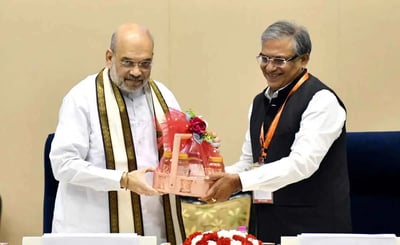
The Supreme Court of India has raised serious questions about the ongoing Special Intensive Revision of voter rolls in the national capital. A three-judge bench led by the Chief Justice of India questioned the Election Commission of India over its strict procedures that removed millions of residents from the active voting lists. The top court questioned why citizens whose names were already present on the recent 2026 electoral rolls are being forced to fill out Form 6, an application legally intended only for first-time applicants who have never voted before in their lives.
The controversy emerged during hearings on public interest petitions filed by social activists challenging the arbitrary deletion of names across assembly constituencies in Delhi. Senior lawyers appearing for the citizens informed the judges that out of forty-seven lakh names removed from the draft lists, nearly forty-three lakh voters were marked as absent or permanently shifted. However, a huge number of these excluded citizens had never received verification papers at their doorsteps during the revision drive. Instead of allowing these residents to update their residential records or submit proof of living in the city, the election administration directed everyone to submit Form 6 as if they were brand new voters.
The judges pointed out a major legal contradiction in this approach. Form 6 contains a mandatory legal declaration where an applicant must state on paper that their name has never appeared on an electoral register anywhere in the country. The court asked how an honest citizen who has voted in multiple previous elections and was enrolled on the 2026 list could be forced by the state to sign a false statement just to get their voting right back. The bench observed that forcing existing voters to sign declarations meant for fresh applicants creates an unnecessary administrative trap that threatens the basic constitutional right of citizens to cast their votes.
Justice Joymalya Bagchi and Chief Justice Surya Kant observed that the poll body should make it easier for people to remain on the list rather than creating paperwork obstacles. For an existing voter who has simply shifted from one neighborhood in Delhi to another, the proper legal form under election rules is Form 8, which is specifically designed for address corrections and changes of residence. The judges told the election authorities that failure to deliver an enumeration slip to a resident cannot automatically mean that the person has permanently abandoned the city or lost their right to vote.
The legal scrutiny also directed attention to the administrative functioning under Chief Election Commissioner Gyanesh Kumar. The top court noted that the right to vote is a vital democratic right and that election officials have a primary duty to show due diligence before stripping citizens of their names from the voter lists. Rather than making common citizens run from office to office, the court suggested that the commission should take the initiative to reach out directly to the public, extend deadlines, and provide clear ways for affected families to explain any non-response.
Lawyers representing the Election Commission argued that the revision was conducted to create a clean slate and eliminate ghost voters, duplicate registrations, and outdated records from the capital rolls. They maintained that the verification process was carried out through door-to-door visits by local booth-level workers and that the roll revision is still open for claims and objections. However, under close questioning from the bench, counsel for the commission agreed that the poll body would examine the concerns raised by the court and discuss practical ways to allow shifted voters to submit Form 8 or basic verification sheets instead of Form 6.
The court also raised concerns about automated computer systems being used to flag citizens under the category of logical discrepancy. The judges remarked that the legality of using automated data matching to remove names without meaningful human review has not been approved and remains open for legal examination. Civil rights advocates have warned that using rigid computer patterns to delete voters risks cutting off millions of vulnerable residents, including daily wage earners and temporary renters who frequently change houses within the city.
For ordinary residents in working-class neighborhoods and large housing societies across Delhi, the court intervention brings a sense of relief. Many long-time residents had expressed deep shock after discovering that their names had disappeared from draft registers despite holding valid voter identification cards and living at the same address for decades. Community volunteers pointed out that forcing elderly residents and daily wage workers to gather complex birth records and historical family proofs just to submit Form 6 was causing panic and confusion on the ground.
The Supreme Court directed the election authorities to explore immediate remedial measures to close the gap of forty-three lakh missing voters before final rolls are prepared. The bench suggested that the list of removed electors should be openly displayed at local polling booths so that citizens know their current status and can easily contact booth officers to submit Form 8. The top court gave the commission two weeks to review its operational instructions and report back with a clear, citizen-friendly solution.
The legal proceedings serve as a reminder that cleaning voter rolls cannot come at the expense of disenfranchising lawful citizens. As the matter heads for its next hearing, public focus will remain on whether election authorities adopt a fair, accessible system that protects every citizen constitutional right to vote without creating unfair bureaucratic hurdles.