
Donald Trump Election Setback Welcomed by Iranians as Crowds Gather on Tehran Streets
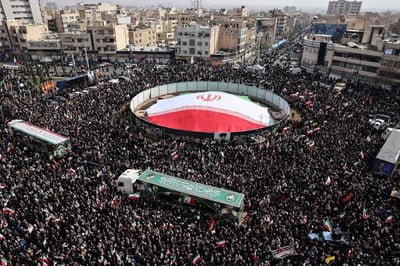
Crowds across the Iranian capital of Tehran gathered in public squares to mark the election setback faced by Donald Trump in the United States polls, viewing the political outcome as a defeat for aggressive foreign intervention. Citizens, political observers, and street demonstrators in Iran expressed that ordinary American voters sent a direct message against conflict by voting against Trump's political camp. The atmosphere across official gatherings and city centers reflected intense public interest in the American political results, which directly impact daily life, sanctions, and economic realities in Iran.
During state-backed demonstrations and public rallies in central Tehran, participants carried placards and banners stating that the American public had said a clear no to war. Demonstrators took part in vocal protests, setting fire to American and Israeli flags while chanting anti-Western slogans that have long formed a staple part of revolutionary rallies in the country. For many people attending the gatherings, seeing the political fortunes of Donald Trump decline in Washington was viewed as a moment of symbolic vindication after enduring years of severe economic boycotts and hostile rhetoric.
The hostility toward Donald Trump in Iran stems from his past policy decisions that crippled the Iranian economy and brought the two nations to the brink of armed conflict. During his time in the White House, Trump unilaterally withdrew the United States from the landmark 2015 nuclear agreement that had been signed alongside major world powers. Following that exit, his administration imposed a maximum pressure campaign involving blanket financial sanctions, targeting Iran's oil exports, shipping lanes, and international banking transactions, which triggered rapid inflation and severely devalued the national currency.
Public memories in Tehran also remain raw over the 2020 targeted airstrike ordered by Donald Trump that killed top Iranian military commander General Qasem Soleimani outside Baghdad airport. The assassination caused widespread anger across Iran, leading to direct missile attacks on American bases in Iraq and pushing regional tensions to dangerous highs. Because of that history, Iranian public opinion and political factions have viewed Donald Trump as an exceptionally dangerous adversary, making his domestic political setbacks an occasion for vocal public reaction.
Local news outlets and official commentators in Tehran framed the election results as proof that common citizens in Western countries are growing tired of costly foreign wars and aggressive military spending. Analysts on state television pointed out that working families in the United States are focused on their own domestic troubles, such as healthcare, living costs, and job stability, rather than supporting unilateral military adventures in the Middle East. This perspective was shared by everyday shopkeepers and university students in Tehran, who voiced hope that political shifts in Washington might slowly reduce the danger of wider warfare.
Despite the celebrations on the street, foreign policy experts and seasoned diplomats in Tehran offered a more cautious view regarding the future of relations between the two countries. Scholars pointed out that foreign policy towards Iran in Washington rarely changes completely with an election result. Even when different political leaders hold legislative or executive power in the United States, basic strategic rivalries over nuclear enrichment, ballistic missile programs, and regional influence usually stay firmly in place, meaning that economic sanctions are unlikely to vanish quickly.
For the ordinary people of Iran, the real desire remains focused on economic relief and normal engagement with the wider world. Decades of international trade restrictions and banking blacklists have made basic consumer goods, life-saving medicines, and industrial parts scarce and expensive for average families. While street crowds celebrated the political retreat of a leader they view as a chief antagonist, working citizens across Tehran remain hopeful that a less aggressive posture from Washington could eventually open the door to dialogue and ease the heavy financial burdens pressing down on their everyday lives.