
US Imposes Sanctions on Indian and Turkish Companies for Assisting Iran Military Programs
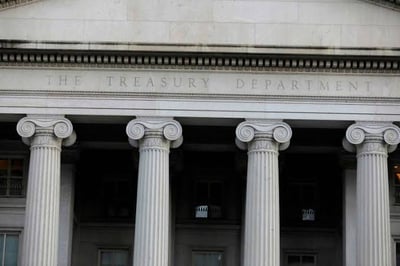
The United States government has placed direct economic sanctions on multiple commercial firms and business leaders located in India and Turkey, accusing them of acting as key supply links for Iran's military network. The announcement from Washington marks a sharp push to cut off international supply chains that help Tehran build military attack drones, long-range ballistic missiles, and advanced weapons parts. Officials from the United States Department of the Treasury stated that foreign companies helping Iranian defense programs will face complete isolation from the American banking and trade system.
The action comes as Western powers step up efforts to halt the spread of unmanned aerial vehicles and missile technology across conflict zones in the Middle East and Eastern Europe. American intelligence and trade monitoring officials pointed out that Iranian military procurement groups rely on complicated international purchase routes to buy sensitive mechanical parts, electronic boards, and aviation gear that cannot be bought openly due to global trade restrictions. By routing orders through regular commercial brokers in third countries, these defense networks attempt to conceal their final destinations.
Under the fresh sanctions list, commercial enterprises identified in India and Turkey are accused of processing payments, facilitating shipping routes, and supplying specialized components to Iranian defense research organizations. These parts include high-precision guidance tools, electric engines, and raw materials used to assemble long-range attack drones. United States authorities said that even when overseas firms operate under standard commercial licenses, delivering controlled technologies that eventually enter armed weapons makes them liable to severe international bans.
The legal and financial impact of these sanctions is severe for the targeted businesses. Any bank accounts, property, or business assets owned by the listed companies within the United States or held by American financial institutions are immediately frozen. Furthermore, American citizens, shipping lines, and banks are completely banned from doing any business with them. International banks outside the United States also avoid dealing with sanctioned companies because doing so can lead to secondary penalties and cut off their own access to the global US dollar clearing system.
For India, the inclusion of domestic commercial entities on the American sanctions register brings added diplomatic and trade attention. Indian foreign trade authorities have consistently stated that private businesses must follow global export control rules and keep clear records of their buyers. However, industry representatives note that in complex international supply networks, small engineering firms often export dual-use items to foreign traders without knowing that their products might later be transferred through third-party agents into sanctioned military setups.
In Turkey, which has served as a key transit crossroads between Europe and Asia, the sanctions highlight ongoing scrutiny over regional border trade. Turkish authorities have faced continuous pressure from Western partners to tighten oversight on private trading houses that supply electronic and aviation goods to neighboring countries. Turkish business owners have argued that regular civilian export contracts should not be mixed up with military sales, but American regulators maintain that goods ending up in weapons factories present an unacceptable global security threat.
The United States Department of State affirmed that Washington will continue to track down shadow procurement channels worldwide. Senior American officials emphasized that international firms must conduct careful background checks on their overseas trade partners. They warned that any commercial broker, shipping agent, or private manufacturer that ignores red flags and provides technical aid to sanctioned military programs will face the exact same legal and financial consequences.
The move signals an increasingly strict enforcement climate for businesses operating across international manufacturing and technology export sectors. As major world powers monitor supply chains closely, commercial companies in emerging trade centers must maintain strict trade compliance records to avoid getting caught in geopolitical crossfire between competing global forces.