
Eknath Shinde says no blood but ideology matters can ideology stay alive without BJP power politics and money
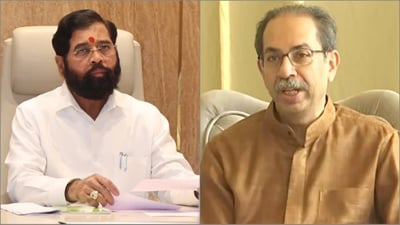
The political battle for the ultimate legacy of the Shiv Sena reached a boiling point during the high profile foundation day celebrations in Mumbai. Addressing a massive gathering of supporters Maharashtra Deputy Chief Minister Eknath Shinde launched a blistering attack against the Uddhav Balasaheb Thackeray faction. Shinde boldly declared that political succession is never determined by blood relations but strictly by shared ideology. He asserted that the party is not a piece of land to be inherited through a family lineage but rather a living philosophy belonging to millions of ordinary grassroots workers. Taking a sharp swipe at the declining strength of his rivals Shinde mocked suggestions that regional forces should merge with the Congress advising the opposition leadership to introspect deeply on their own systemic failures instead of lecturing others.
However this grand declaration about pure ideology has triggered intense skepticism across the political spectrum. Many neutral observers and critics argue that modern regional ideology cannot remain alive or functional without the backing of a dominant national machinery like the Bharatiya Janata Party. The political narrative shifts dramatically when held up against the realities of state level maneuvering where neither emotional history nor pure philosophy seems to withstand the heavy influence of power politics and immense financial backing. Detractors point out that Shinde engineered a massive internal rebellion that effectively cheated the original leadership breaking the party apart and completely dividing the legacy that once united cousins Raj Thackeray and Uddhav Thackeray. This massive split paved the way for Shinde to form an immediate alliance with the BJP to secure institutional dominance.
The core question dominating public discourse is whether regional political ideology can genuinely survive in isolation without the active patronage of a central ruling power. While the Shinde faction maintains that their rebellion was a necessary rescue mission to preserve the original right wing principles of Balasaheb Thackeray from being compromised by opposition alliances their opponents present a completely different viewpoint. Critics argue that shifting party loyalty and aggressively seizing the official Shiv Sena name and bow and arrow symbol through state institutions proves that modern political survival depends entirely on strategic resources and governing authority. The current alignment shows that regional players increasingly rely on the immense organizational weight of national parties to validate their ideological claims on the ground.
This ongoing confrontation underscores a major transformation in democratic systems where institutional control frequently overrides historical sentiment overnight. The public rhetoric regarding legacy and principles serves as a powerful tool for voter engagement but the underlying operational mechanics remain heavily anchored to legislative numbers strategic alliances and financial strength. As the state moves steadily toward critical upcoming electoral tests the civilian population is left to evaluate whether this new alignment represents a genuine continuation of a historical movement or if it is simply a product of tactical convenience. The current scenario demonstrates that the evolution of state politics is increasingly driven by the pragmatic necessity of remaining in power leaving traditional manifestos vulnerable to rapid realignments.