
Elon Musk 875 Million Dollars Daily Gain Drives Net Worth to Historic Heights as World Richest Person
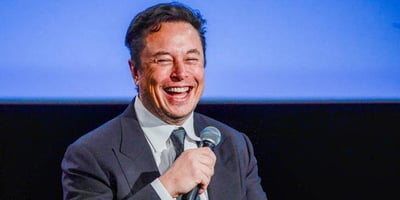
The global financial landscape has witnessed one of the most astonishing accumulations of wealth in economic history, as Tesla chief executive and SpaceX founder Elon Musk added roughly 320 billion dollars to his personal fortune over a single twelve month period. According to an extensive analysis published by financial research firm BestBrokers using real-time wealth tracking data, this unprecedented surge equates to an average addition of nearly 875 million dollars to his net worth every single day. To put this staggering accumulation into everyday context, the tech mogul generated more wealth every twenty-four hours than most major international corporations earn in an entire operational year. The rapid expansion of his personal empire highlights the staggering scale of modern technology valuation and underscores his position at the absolute pinnacle of global wealth indices, sitting hundreds of billions of dollars ahead of his nearest industrial competitors.
The primary catalyst behind this historic wealth explosion was the long-awaited initial public offering of his commercial aerospace enterprise, SpaceX. When the company debuted on public stock exchanges, immense global investor demand pushed its corporate valuation to historic highs, briefly driving Musk total net worth past the landmark one trillion dollar boundary. During peak trading hours immediately following the public listing, his estimated paper fortune touched an intraday high of nearly 1.45 trillion dollars, officially marking him as the first dollar trillionaire in human history. Although subsequent stock market fluctuations and intense profit-taking brought share prices back down to grounded levels, erasing hundreds of billions in temporary paper gains within weeks, his underlying wealth quickly re-stabilized between 725 billion dollars and 823 billion dollars, solidifying his dominance over global financial rankings.
A closer look at the underlying financial drivers reveals that space technology and satellite infrastructure have become the central pillars of his economic power. Latest corporate earnings reports from SpaceX demonstrated robust fundamental performance, with quarterly revenue climbing to 7.8 billion dollars and handily surpassing Wall Street baseline forecasts. The primary revenue generator continues to be Starlink, the company high-speed satellite internet service, which nearly doubled its top-line turnover compared to previous operational periods. At the same time, the aerospace giant disclosed aggressive capital investments in cutting-edge computing hardware, allocating 15.8 billion dollars toward artificial intelligence infrastructure out of a total quarterly capital expenditure of 18.3 billion dollars. These heavy operational investments demonstrate how deeply intertwined commercial space exploration and artificial intelligence have become within his wider technology ecosystem.
When compared against other global business leaders, the magnitude of this one-year fortune addition becomes even more pronounced. His personal gain of 320 billion dollars far outpaced the earnings of every other prominent figure on international wealth rosters. Dell Technologies founder Michael Dell achieved the second largest wealth expansion over the same timeline, adding 107.6 billion dollars to his total net worth, which represents roughly one-third of the growth achieved by the world richest person. This broader surge reflects an ongoing market rally across the technology sector, where top executives in artificial intelligence, cloud computing, and hardware engineering have seen their collective assets rise to unprecedented levels. Industry analysts note that tech leaders currently occupy eight of the top ten positions on global wealth leaderboards, reflecting a structural shift in where global economic value is created.
Financial strategists emphasize that the vast majority of this multi-hundred-billion-dollar fortune remains non-liquid paper wealth tied directly to equity stakes across his corporate portfolio. Musk maintains a controlling presence in his primary ventures, holding an estimated 38 to 42 percent stake in SpaceX alongside roughly 20 percent ownership in Tesla, in addition to substantial stakes in xAI and social platform X. Because these assets consist of fluctuating equity shares rather than cash deposits in bank vaults, his overall net worth experiences sharp daily shifts depending on market sentiment, broader economic indicators, and quarterly corporate earnings disclosures. Nevertheless, with SpaceX forecasting long-term annual revenues that could eventually top one trillion dollars driven by global satellite adoption, his financial trajectory remains unprecedented in modern commerce.
Looking ahead, this remarkable concentration of capital presents both extraordinary opportunities and complex regulatory questions for the global economy. As private companies take on increasingly prominent roles in satellite broadband deployment, space transportation, artificial intelligence development, and clean energy transition, executive decisions made within a small group of flagship enterprises carry systemic macroeconomic importance. Despite market volatility and recurring stock adjustments, the sheer distance between the top position and the rest of the world billionaire population creates an unprecedented buffer. For independent observers, investors, and industry analysts, the trajectory of this fortune serves as a powerful barometer for the financial power generated by frontier technologies in the modern age.