
Existing Cars Cannot Be Upgraded For E30 Ethanol Petrol Confirms BMW India Chief
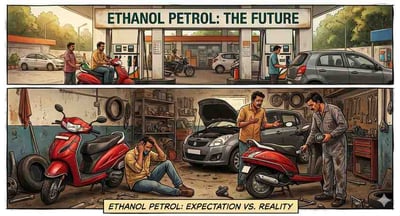
The ambitious push toward greener transport fuels in India has hit an unexpected roadblock from the luxury automotive sector. In a recent disclosure that sent ripples across the domestic automotive market, BMW Group India President and Chief Executive Officer Hardeep Singh Brar clearly stated that vehicles currently running on Indian roads cannot simply be upgraded or retrofitted to handle upcoming E30 ethanol blended petrol. As the central government aggressively explores medium term options like E22, E25, E27, and E30 to lower the national crude oil import bill, millions of car owners are left wondering if their relatively new vehicles will soon face early retirement or engine damage. The official clarification from a major manufacturing boss sheds light on a massive technological gap that separates existing vehicle architectures from the chemical realities of highly concentrated bio fuels.
The core issue stems from basic chemistry and mechanical engineering rather than a mere software issue. Ethanol is highly corrosive to standard rubber compounds, metallic lines, fuel injectors, and sealing gaskets that form the lifecycle of regular internal combustion engines. While mandatory production of E20 compliant vehicles only started in April 2023, a massive portion of the active Indian passenger car fleet consists of legacy vehicles that are over 10 years old. These older cars are not even rated safely for the current E20 blend available at fuel pumps. When ethanol concentration jumps to 30 percent, the mixture aggressively absorbs moisture from the atmosphere, creating water contamination inside the fuel tank that leads to severe rust and unexpected engine stalling. Upgrading these systems after they leave the factory is practically impossible for dealerships because it requires stripping out the entire fuel delivery pipeline and replacing it with specialized, resilient materials designed entirely from scratch.
This development highlights a growing friction between rapid environmental policy goals and the financial realities of ordinary consumers. Automotive companies build their engines based on stable, predictable, and long term fuel standards. When the government introduces rapid shifts in blending mandates without giving manufacturers adequate lead time, it creates massive consumer confusion and anxiety in the secondary market. For instance, customer complaints regarding fuel line issues and minor engine performance drops have already started trickling into service centers for specific luxury models. If the transition to E30 is rushed, buyers who purchased expensive vehicles as recently as 2024 or 2025 might find themselves holding assets that suffer from accelerated mechanical degradation or reduced fuel efficiency. The engine control units in regular cars are simply not mapped to inject the higher volume of fuel required to match the lower energy density of high ethanol blends, meaning users will experience lower mileage and dropped performance.
To protect consumer investments and prevent a major crisis in the automobile sector, a balanced and multi dimensional solution is required. Policymakers must provide highly transparent, long term roadmaps so that research teams can validate future engines for alternative fuels well in advance. More importantly, fuel stations across India must continue to provide multiple fuel choices at the regular dispensing pumps simultaneously. Forcing a single high blend option onto the public will ruin legacy engines and harm the trust of vehicle buyers. While reducing foreign oil dependency and promoting agricultural ethanol production are excellent goals for macro economic health, they must not come at the direct cost of destroying active consumer property. The path forward requires protecting the millions of older vehicles on the road today while gradually introducing dedicated flex fuel options for the cars of tomorrow.