
FIFA World Cup 2026 Knockout Stage Qualified Teams And Round Of 32 Rules
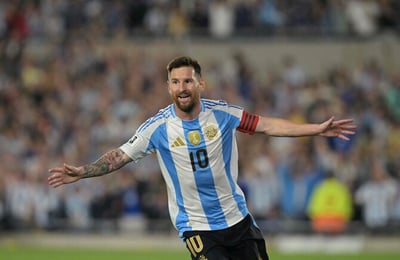
The race for the FIFA World Cup 2026 knockout stage has intensified as the tournament transitions into its highly anticipated Round of 32. With the historic expansion to 48 teams, the traditional group stage dynamics have shifted completely, leaving global football giants and surprising underdogs fighting side by side for survival. As of late June 2026, 19 nations have mathematically secured their spots in the next round, leaving a chaotic scramble for the remaining 13 openings. Co-hosts Mexico and the United States became the first to booking their progression by dominating their respective groups on home soil. Joining the North American hosts are traditional powerhouses Argentina, France, Germany, Spain, and the Netherlands, alongside highly competitive squads like Portugal, Colombia, Brazil, Morocco, Switzerland, and Japan. The dramatic inclusion of nations like Norway, South Africa, and debutants Cabo Verde has injected fresh excitement into the competition, proving that the expanded format is delivering the unpredictable drama that fans around the globe were hoping to see.
Under the newly implemented tournament structure, the qualification criteria for the knockout bracket require a closer look to understand who moves forward. The top 2 teams from each of the 12 groups automatically advance to the Round of 32, accounting for 24 direct qualifiers. The final 8 slots are filled by the best third-placed teams across the entire tournament, creating a highly competitive secondary league table where every single goal matters. Teams like Sweden, Bosnia and Herzegovina, and Ecuador have already taken advantage of this system, booking their places in the last 32 after securing 4 points and favorable goal differences. Conversely, the dreams of several nations have already ended, with Haiti, Jordan, Tunisia, Türkiye, Panama, Qatar, Czechia, Iraq, and Curaçao officially eliminated from the competition. For teams still caught in limbo, such as Belgium, Croatia, and South Korea, everything depends on final match permutations and tiebreakers, which prioritize head-to-head records, overall goal difference, and total goals scored before falling back on fair-play conduct points and global rankings.
Analyzing this updated tournament layout reveals significant structural vulnerabilities despite the obvious financial success of expanding the event. While a 48-team tournament allows more developing football nations to experience the global stage, the quality of play in certain group stage matchups has faced noticeable dilution. Furthermore, allowing 8 third-placed teams to advance means that multiple squads can move deep into the tournament despite winning only 1 match or accumulating multiple draws, potentially rewarding defensive and overly cautious strategies. The massive gap between elite squads and debutants was highlighted by games like Senegal thumping Iraq 5-0, raising questions about whether the group stage acts as a true sporting test or merely an extended qualification phase. Additionally, the unbalanced scheduling means some groups finish days before others, giving qualified teams vastly different recovery periods before embarking on the single-elimination knockout path, which could heavily impact player performance when the stakes are highest.
Looking ahead, the single-elimination tournament begins immediately on June 28, 2026, culminating in the final match at MetLife Stadium on July 19, 2026. The introduction of the Round of 32 eliminates any margin for error, as any draw after 90 minutes will trigger 30 minutes of extra time and a potential penalty shootout to decide the winner. Managing player fatigue will become the defining factor for managers, as teams reaching the final must now navigate a grueling 8 matches instead of the traditional 7. Early knockout matchups are already taking shape, with heavyweights like Brazil locked in to face Japan, while Morocco prepares for a tactical showdown against the Netherlands. As the remaining group matches conclude over the next 48 hours, the final bracket will stabilize, setting the stage for a month of high-stakes football where past reputations mean nothing and 1 defensive error can send an entire nation home.