
Flydubai Cockpit Attack Narrative Under Suspicion As Five Glaring Questions Expose Deep Flaws In Official Version
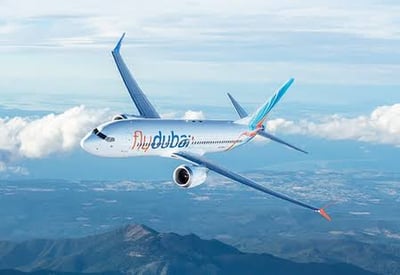
A cloud of doubt has settled over the dramatic official accounts describing the violent struggle aboard Flydubai flight FZ1073 from Dubai to Tel Aviv. While political leaders quickly presented the public with an action-packed tale of averted disaster, aviation experts, independent journalists, and civil rights observers have begun taking apart the story piece by piece. As official statements continue to change and key technical details clash with the laws of physics and established airline protocols, serious questions are being asked about whether the public is being told the complete truth or fed a politically useful version of events.
The first major question asks why the co-pilot was allowed to fly a commercial passenger jet despite having been previously flagged for serious ideological concerns. International reports revealed that Omani authorities had previously removed the individual from flight duties and training programs at Oman Air over worries regarding his personal views. Furthermore, another foreign airline chose not to employ him following pre-employment evaluations. How an individual with known security red flags managed to bypass background checks, secure a commercial pilot seat at Flydubai, and be assigned to a sensitive regional route remains completely unexplained by airline management and intelligence agencies.
The second question challenges the regulatory puzzle of how an Omani citizen was cleared to fly directly into Israeli airspace. Israel does not maintain formal diplomatic relations with Oman, and official aviation rules have historically prohibited civilian pilots from non-diplomatic nations from commanding commercial flights into Tel Aviv. Despite Israeli leaders claiming that foreign airlines are barred from using such crews, government agencies in Tel Aviv reportedly received the full crew and passenger manifest hours before takeoff. Observers are asking why security departments and intelligence services failed to raise an immediate red flag, or whether standard security enforcement was quietly bypassed.
The third question focuses on the bizarre official claim that an untrained passenger stabilized a passenger jet plunging from the sky. In a heavily circulated media appearance alongside political leaders, a passenger identified as an ordinary plumber claimed he rushed into the flight deck, grabbed the steering controls, and pulled the aircraft out of a terminal dive simply because he watched aviation documentaries on television. Commercial flight instructors and aeronautical engineers have pointed out that an airliner plummeting thousands of meters generates severe gravitational forces capable of incapacitating even trained fighter pilots. The suggestion that someone with zero flying experience casually stepped into a chaotic flight deck, correctly operated complex flight surfaces, and leveled the plane mid-dive sounds entirely invented to create an instant public hero.
The fourth question highlights a striking physical contradiction regarding the absence of widespread injuries inside the cabin during a dive of over five thousand meters. Public flight-tracking data indicates that the airliner experienced a rapid descent, falling roughly seventeen thousand feet in less than two minutes before recovering. Under standard aerodynamic principles, a sudden plunge followed by an emergency pull-up creates intense negative and positive gravitational forces, sending unfastened passengers and heavy objects hurtling into the ceiling. In previous incidents involving far milder altitude losses of just a few hundred feet, dozens of travelers suffered broken bones and severe head wounds. Yet publicly available reports indicate that not a single passenger suffered serious impact injuries, leading aviation specialists to question the accuracy of the dive descriptions offered to the media.
The fifth question examines the strange timeline regarding the alleged prayer moments before the violence began. Political reports suggested that the co-pilot asked for permission to pray and launched the violent strike just minutes later, framing the act as religiously motivated extremism. However, timing records show that the attack occurred roughly two and a half hours into the morning flight, an hour that does not correspond to standard morning prayer schedules in the region. The quick attempt by political figures to label the dispute as a holy war before independent interrogators could determine the real motive has reinforced suspicions that the narrative was rushed to influence public opinion ahead of high-stakes national elections.
These five unresolved questions demonstrate that the official narrative surrounding the Flydubai emergency landing is riddled with major holes. When airlines take a cautious approach while political figures rush to declare terror plots and promote cinematic heroes, public trust naturally erodes. Until independent international investigators release verified flight recorder data, air traffic audio recordings, and neutral interrogation transcripts, the extraordinary claims surrounding this mid-air incident will continue to face deep suspicion from the global community.