
Flydubai Cockpit Stabbing False Flag Claims Grow As Glaring Plot Holes And Political Motives Face Global Scrutiny
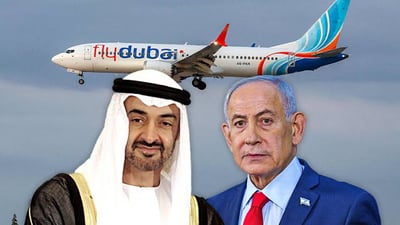
A quiet commercial journey across the desert sky nearly ended in total catastrophe when a Flydubai passenger jet traveling from Dubai to Tel Aviv suddenly tilted into a steep dive. Passengers sitting in the main cabin felt their stomachs drop as the aircraft fell rapidly toward the ground below. Loose items flew across the aisles, people began crying out in fear, and the calm of a routine three-hour flight was shattered in seconds. The terrifying plunge was not caused by a mechanical failure or sudden turbulence, but by a violent physical fight that broke out inside the locked cockpit between the two pilots controlling the aircraft.
According to initial reports, an Omani pilot pulled out a sharp knife and lunged at the Indian captain seated next to him. A desperate struggle for control immediately followed, with the steering column pushed forward and the aircraft hurtling downward. Despite taking severe cuts and losing blood, the wounded Indian captain fought back with everything he had to keep the aircraft from crashing. As shouting echoed through the front of the cabin, crew members and passengers rushed forward, managed to enter the cockpit, pulled the attacker away from the controls, and pinned him to the floor. The aircraft was finally brought back to level flight and made an urgent diversion to an airfield in Saudi Arabia, where local police took the suspect into custody.
Almost immediately, the political reaction from Israel turned what looked like a rare workplace crisis into an international war scare. Prime Minister Benjamin Netanyahu quickly went before news cameras to declare that the event was an organized terror attack planned by Iran. His defense minister, Israel Katz, backed the claim by calling the Omani pilot a religious extremist on a holy mission to destroy the aircraft. Israeli spokespersons went even further, comparing the narrow escape to the tragic events of September 11. These explosive claims were announced to the public within hours, long before aviation investigators had even touched the cockpit voice recorder or spoken with the airline.
The airline itself told a completely different story. Flydubai issued a very careful statement warning everyone not to jump to conclusions. Company spokespersons made it clear that the situation was in its earliest stages, that nobody understood the real reason behind the fight, and that facts could only be established through a proper formal investigation. Flydubai did not mention terrorism, did not accuse any foreign government, and refused to endorse the dramatic political claims coming out of Tel Aviv. This massive difference between the airline and the politicians raised immediate questions about why political leaders were so eager to declare a terror plot without basic evidence.
When independent observers began looking at the official story, obvious contradictions began to pile up. The first accounts spread across social media claimed the two pilots were Russian and Ukrainian nationals who got into a fistfight over the ongoing war in Eastern Europe. Soon after, another version claimed that an Emirati pilot had carried out the attack. Only later did the story settle on an Omani pilot attacking an Indian co-pilot. When basic facts like the nationality of the flight crew change three times in a single day, it shows that people in power were rushing to feed headlines to the press before checking the actual crew roster.
The story faces even bigger problems when matched against the physical reality of modern aviation security. Ever since global security standards were overhauled after the year two thousand and one, every commercial airliner has been fitted with heavy armored cockpit doors. These doors are bulletproof, reinforced with thick steel bars, and built specifically so nobody can break them down from the passenger cabin. Yet Israeli officials initially told reporters that a brave passenger had simply smashed through the armored door with his bare hands. When aviation experts pointed out that kicking down an armored security door is physically impossible, officials changed their story, claiming the bleeding Indian pilot crawled across the floor to press an unlock switch from the inside.
Equally strange was the sudden appearance of backup pilots on what was supposed to be a short trip. Official reports claimed that two relief captains were conveniently sitting in passenger seats and took the controls to land the plane safely in Saudi Arabia. In commercial aviation, airlines do not waste money placing two fully certified relief captains inside the cabin on a standard three-hour route. Spare crews are stationed at major airport hubs or rest in hotels, not placed in passenger seats on short flights. When pressed to explain why four pilots were on this flight, Israeli media claimed they were needed in case the aircraft had to divert over Kuwait, even though the standard flight path between Dubai and Tel Aviv never goes anywhere near Kuwaiti airspace.
The story turned even more cinematic when former United States President Donald Trump offered his own version of events. Trump claimed that an ordinary passenger who worked as a plumber burst into the cockpit, grabbed the controls, and pulled the falling airliner out of its deadly dive. While this makes for an exciting movie scene, basic physics proves how unlikely it is. When a heavy passenger jet plunges fourteen thousand feet at extreme speeds, pulling out of the dive creates crushing physical forces known as G-forces. These forces pull blood away from the head, often causing even trained fighter pilots wearing special pressure suits to lose vision or pass out. The claim that an untrained civilian with zero flying experience could casually take the controls and save the airliner during an extreme dive stretches belief beyond reason.
To make matters worse, the passenger praised for the rescue appeared on news broadcasts only hours after landing, holding up blood-stained clothes and socks for the cameras. Normal people who survive a terrifying near-crash and a bloody struggle inside an airplane are usually placed in hospital care or questioned by federal investigators. Instead, this episode was instantly turned into a staged photo opportunity designed to spread across television screens and social networks around the world.
There are also serious regulatory rules that make the entire incident hard to explain. Israeli civil aviation policies strictly forbid civilian pilots from countries that have no diplomatic relations with Israel from flying into their airspace. Oman has no official diplomatic ties with Israel. Under normal rules, an Omani citizen should never have been approved to sit at the controls of an airliner heading into Tel Aviv. Aviation analysts are asking how such a major security rule was bypassed, or whether key details about the flight crew are still being hidden from the public.
To understand why this wild story was pushed so aggressively, one only needs to look at the political calendar. Benjamin Netanyahu is fighting for his political survival, facing severe criminal corruption charges, and heading into high-stakes national elections. His entire political career depends on convincing voters that he is the only strong leader capable of defending the country against violent enemies. Regional news outlets had already published warnings days earlier that aviation incidents could be staged or exaggerated to create an excuse for a wider war against Iran. When an ordinary cockpit dispute is instantly transformed into a near-war crisis, it becomes clear that political ambition, not passenger safety, was driving the entire narrative.