
Foreign Minister Botchorishvili Says Georgia and Singapore Committed to Expanding Political and Economic Ties
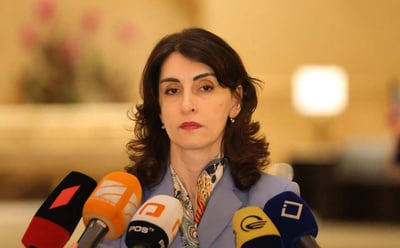
A diplomatic journey across continents unfolded on 22 July 2026 as top officials from Georgia arrived in Singapore to forge new bridges between Eastern Europe and Southeast Asia. Georgian Vice Prime Minister and Foreign Minister Maka Botchorishvili officially confirmed that both nations are deeply committed to expanding their political and economic ties. The official visit featured intense bilateral discussions involving Georgian Prime Minister Irakli Kobakhidze, Singapore Prime Minister Lawrence Wong, and Singapore President Tharman Shanmugaratnam. Both sides recognized that despite their geographical separation, they share a remarkably similar strategic vision as crucial commercial corridors in their respective regions. Botchorishvili emphasized that this diplomatic initiative is not simply a routine handshake but a calculated strategy to elevate Georgia position within the South Caucasus while offering Singapore an accessible gateway into trade routes connecting Europe and Asia.
The bilateral discussions centered heavily on creating concrete economic synergies, moving far beyond formal political statements. Botchorishvili met directly with Singapore Foreign Minister Sim Ann on 23 July 2026 to map out actionable pathways for trade expansion, aviation connectivity, and mutual investment initiatives. Key economic projects dominated the agenda, including potential Singaporean involvement in major Georgian infrastructure projects such as the strategic deep sea port at Anaklia and the expansion of Vaziani International Airport. Representatives from major Singaporean entities, including Changi Airports International, actively participated in high level talks to assess growth opportunities. Both nations pride themselves on maintaining open market economies, business friendly environments, and lean administrative frameworks, which provides a solid foundation for private sector collaboration and joint investments.
While the potential for mutual growth is substantial, turning these diplomatic ambitions into measurable economic achievements presents distinct operational realities. Distance, transport costs, and differing regulatory systems require meticulous work before commercial enterprises can fully capitalize on these political commitments. Georgia seeks to establish itself as a resilient logistics hub along the Middle Corridor, yet it must continuously upgrade its domestic infrastructure to match the world class standards maintained by Singapore. On the other side, Singaporean investors are known for taking a cautious, risk averse approach when entering emerging markets, meaning that initial interest must be backed by institutional stability and long term financial guarantees. The success of this diplomatic effort will ultimately depend on whether both governments can convert initial enthusiasm into binding trade agreements and sustained private sector engagement rather than letting momentum fade after the official delegation returns home.
Looking ahead, this diplomatic push marks an important step toward broader interregional integration between Asian markets and the South Caucasus. Botchorishvili stressed that fostering closer connections between private business communities will remain the central focus of ongoing bilateral work. By sharing governance expertise, digital innovation strategies, and port management technologies, Singapore and Georgia can build a resilient economic alliance that benefits both populations. The momentum built during these July 2026 meetings sets a promising precedent for future diplomatic engagements, proving that small, agile economies can work together effectively to expand their global footprint.