
France High Alert For Fresh Unrest As Student Anti Government Protests Loom And Curfews Remain In Major Cities
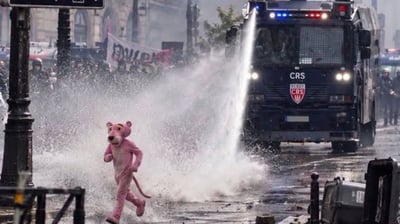
Security services across France have been placed on maximum readiness as authorities prepare for another wave of student and anti-government demonstrations across several metropolitan regions. Government officials have warned that the weekend ahead could see renewed street confrontations, prompting police divisions to deploy heavy reinforcements to safeguard commercial corridors, public buildings, and transportation networks. Interior Minister Laurent Nunez announced that nighttime curfews introduced to prevent looting and vandalism will remain active in key urban centers, signaling that the administration is taking strict measures to protect public order and deter coordinated disruption.
The growing wave of unrest started as student-led demonstrations demanding improved conditions in secondary schools and universities, before quickly joining broader civilian anger over rising living expenses, inflation, and public transport costs. Hundreds of thousands of citizens took to the streets across France in recent days to register their frustration with government economic measures. However, peaceful marches in cities including Paris, Lyon, and Lille were repeatedly hijacked by fringe agitators, resulting in street clashes with law enforcement, attacks on civic properties, and widespread smashing of storefronts.
To stop criminal networks and organized groups from exploiting the public demonstrations, local prefectures imposed partial curfews prohibiting nighttime movement in high-risk zones. Interior Minister Laurent Nunez stated that the security restrictions have succeeded in curbing large-scale looting and property damage on the edges of rallies. Addressing security commanders, Nunez confirmed that municipal curfews are likely to stay in place for several days to prevent opportunistic vandalism while police units monitor online chatter calling for coordinated street blockades.
The scale of earlier clashes has placed heavy physical strain on national security personnel. Law enforcement agencies carried out more than two thousand five hundred arrests across the country after recent riots left hundreds of police officers and demonstrators injured. Damage to commercial properties has reached hundreds of millions of euros, with over three thousand retail shops, bank branches, and small businesses reporting broken windows or stolen merchandise. Business federations have urged the central government to implement firm security perimeters to protect local shopkeepers and prevent further economic harm to downtown districts.
Political tension surrounding the unrest has reached the highest levels of the French government. Following the chaotic scenes on city streets, the interior minister reportedly tendered his resignation, taking responsibility for operational difficulties during early protests, though President Emmanuel Macron rejected the offer and ordered cabinet ministers to focus on re-establishing control. Government spokespersons have cautioned that extremist political factions are deliberately trying to fuel street confrontations to destabilize institutions ahead of upcoming national elections, while opposition leaders contend that heavy-handed police actions risk inflaming peaceful protesters.
With international travel advisories issued by foreign governments and cultural institutions facing temporary closures, municipal authorities are adopting proactive security arrangements. Mobile rapid-reaction squads, specialized water-cannon units, and aerial surveillance drones have been pre-positioned near iconic city centers, government squares, and busy university areas. While student groups and trade unions insist on their legal right to demonstrate against social hardship, the French government remains committed to maintaining strict curfews and visible police patrols until street violence fully subsides.