
India Demands Veto Power For All Permanent Members In Reformed United Nations Security Council To Ensure Fairness And Global Equality
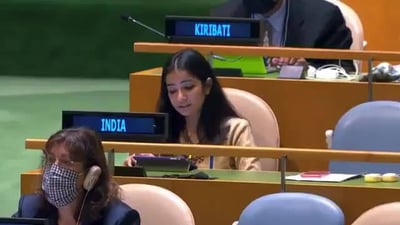
India has delivered a firm message on global diplomacy at the United Nations, asserting that veto rights must belong to every permanent member of a reformed Security Council. Speaking during discussions on long-delayed international governance reforms, India permanent representative to the United Nations, Ambassador Harish Parvathaneni, stressed that basic fairness and justice require all permanent members to share identical rights, voting powers, and institutional duties. New Delhi made it clear that establishing any new category of permanent membership without full veto privileges is fundamentally unacceptable, warning that such compromises would only entrench the very inequality the global community is trying to resolve.
The diplomatic intervention comes amid widespread global frustration over how the highest decision-making body of the United Nations is structured. Currently, only the five victorious powers of the second world war, known as the permanent five, possess the authority to unilaterally block any substantive resolution. India pointed out that this eighty-year-old arrangement no longer reflects the economic realities, demographic strength, or geopolitical weight of modern nations. By aligning its stance with the Common African Position, India emphasized that developing regions across Asia, Africa, and Latin America must no longer be denied an equal voice at the top table of international peace and security.
Ambassador Parvathaneni addressed proposals suggested by some established powers that seek to offer new countries permanent seats while withholding the veto. The ambassador stated that creating a tiered structure of permanent members, where some hold veto power and others do not, would merely introduce second-class status inside the council. He noted that such arbitrary divisions would complicate discussions and protect the privileged grip of existing powers. As long as the veto mechanism exists in the United Nations charter, India argued, it must either be available to all permanent members equally or eliminated altogether.
The Indian representative also brought attention to what he termed a hidden or behind-the-scenes veto within everyday council operations. Beyond the public voting procedures that happen before television cameras, he noted that unwritten rules of consensus allow single member countries to secretly hold up presidential statements, press releases, and sanctions committee decisions without providing public explanations. This informal blocking power allows powerful nations to shield cross-border terror groups and stall critical peacekeeping actions behind closed doors, avoiding accountability in front of the wider General Assembly.
The speech highlighted that previous procedural fixes intended to hold veto-wielding countries accountable have shown limited practical success. Even after the United Nations introduced mandatory debates whenever a permanent member exercises its veto, powerful nations have continued to use the mechanism to advance narrow national objectives. New Delhi observed that while two of the permanent five members have avoided using their veto for decades, the remaining three continue to utilize or threaten the veto frequently, paralyzing the council during urgent international humanitarian and security crises.
Diplomatic observers regard India statement as a pivotal moment in the fight for global institutional overhaul. As the most populous nation and the fastest-growing major economy, India has led the push alongside Brazil, Germany, and Japan for comprehensive expansion in both permanent and non-permanent seats. By insisting that real equality means identical voting authority, India has signaled that emerging global powers will not settle for symbolic recognition without the real authority needed to shape global peace.
4. Meta Title
5. Meta Description
6. Keywords