
French High School Student Protests Turn Violent as Riot Police Clash With Teenagers Across Major Cities
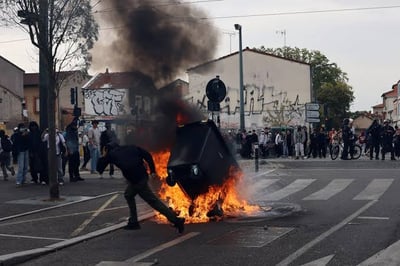
Riot police have clashed with high school students across France as demonstrations over deteriorating classroom conditions and severe educational shortfalls spread to major urban centers. What began as localized student walkouts in the Paris area has expanded into a nationwide movement, forcing the temporary closure or disruption of more than 560 educational institutions. Young protesters have set up barricades, burned rubbish bins, and blocked school entrances, while security forces have deployed tear gas and crowd control measures to disperse demonstrations.
The unrest reflects deep frustration among teenage students, teachers, and parents over the day-to-day conditions in state-run schools. Demonstrators point to overcrowded classrooms, unreplaced teacher absences, lack of basic learning materials, and dilapidated school buildings that lack proper heating in winter and ventilation during heatwaves. In many regional schools, students report spending months without subject instructors, with classes swelling to over thirty-four pupils per room.
Confrontations have intensified across several major cities including Paris, Marseille, Strasbourg, Nantes, Rennes, and Lille. Outside several campuses, groups of youths threw firecrackers, stones, and fireworks toward security cordons, prompting lines of riot officers to move in with batons and tear gas canisters. In Nantes, fires broke out near entrance gates, while emergency fire crews in the capital were repeatedly summoned to put out burning barricades outside secondary schools.
Law enforcement authorities have carried out widespread detentions to prevent further unrest. Government officials confirmed that roughly 2,000 individuals have been placed under police custody since the start of the protest movement, with adolescents and minors making up approximately ninety percent of those detained. The justice ministry has called on parents to keep their teenage children away from street confrontations, with ministers proposing that families should be made financially responsible for public and institutional property damage caused during violent rallies.
The heavy police presence and aggressive crowd-dispersal methods have triggered fierce criticism from human rights groups and student welfare advocates. Rights observers, including representatives from Amnesty International, have warned against using harsh crowd-control rounds and chemical irritants against teenage demonstrators, pointing out that multiple students have sustained severe injuries during street scuffles. Student organizations have accused authorities of heavy-handed repression aimed at silencing legitimate complaints regarding public education.
The student movement has increasingly linked up with broader labor unrest across France. Public sector workers, including teachers, healthcare professionals, and civil servants, have launched coordinated strikes and street marches against planned state budget limits. The national government has been attempting to rein in public debt through broad spending reductions, proposing an education budget increase that falls well below the rate of inflation, which unions argue will only worsen staffing shortages and accelerate the decline of public schools.
Opposition political parties have backed the student demands, criticizing the government for responding to social distress with police batons rather than meaningful educational investment. Lawmakers from left-leaning groups rejected proposals to penalize parents, calling the policy an attempt to distract from years of state underfunding. They have insisted that the administration must hire permanent educators, repair damaged buildings, and lower class sizes to restore trust in the state school system.
Government ministers have acknowledged that student concerns about learning conditions are valid, but they insist that violent behavior and street blockades cannot be tolerated. As inter-ministerial meetings continue in Paris to assess the crisis, educational authorities and union leaders remain locked in dispute over whether the state will reconsider its planned spending curbs or face continued disruptions across French high schools in the coming weeks.