
Gyanesh Kumar Election Fraud Allegations Deepen As Election Commission Drops Disputed Form 6 Voter Rule After Commissioners Called It Illegal
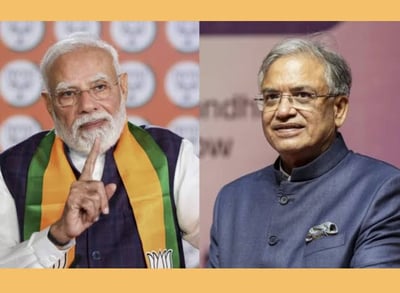
The Election Commission of India has officially completed an embarrassing reversal on voter registration procedures by removing an unapproved declaration requirement from its digital system. The major step back arrives at a critical hour when Chief Election Commissioner Gyanesh Kumar is facing serious public charges of election fraud and calls for removal from major political leaders. Critics and civil society groups have accused the poll leadership of running unauthorized administrative maneuvers to manipulate voter rolls and weaken the voting rights of millions of ordinary citizens. By quietly removing the controversial declaration from the online version of Form 6, the election office has effectively conceded that its previous digital changes stood on shaky legal ground.
The core issue centered around Form 6, the standard application document used by Indian citizens when they register to vote for the first time. For several months, young applicants opening the official ECINET website discovered an extra paragraph linked to the Special Intensive Revision drive. Under this system requirement, citizens seeking to vote were forced to declare whether their names, or the names of their parents and grandparents, were registered in earlier intensive voter rolls from decades past. The digital setup demanded exact old polling booth details and family voter serial numbers before allowing an application to proceed. For ordinary young people who move for work or lack ancestral records, this digital obstacle functioned as an unfair barrier to democratic participation.
Official files revealed that the move provoked immediate, fierce pushback from within the highest offices of the constitutional body. Election Commissioner Vivek Joshi placed his written objection on official record, warning that Form 6 is a statutory form framed under the Registration of Electors Rules of 1960. He pointed out that the election authority possesses no unilateral power to change the wording of a statutory form, because any amendment to parliamentary voter rules requires official action by the Union Ministry of Law and Justice. Election Commissioner Sukhbir Singh Sandhu went even further in his internal notes, explicitly describing the change as unauthorized and illegal, and demanding that the IT team withdraw it immediately.
Despite those explicit internal warnings from both sitting election commissioners, the altered form remained active on the public portal for months. This resulted in an irregular situation where the physical paper form available for download carried the standard legal format, while the digital system used by everyday applicants demanded intrusive family details. When investigative journalism brought these internal dissents and recorded files to light, opposition parties seized on the evidence to allege systematic voter manipulation and central control over voter databases. The revelations sparked widespread street protests and legal petitions before the Supreme Court demanding constitutional accountability.
The dispute reached a turning point when the Supreme Court of India examined the ongoing controversy and explicitly clarified that it had never approved the modified digital version of Form 6. Deprived of judicial shelter, the election administration was forced to retreat. The electoral roll division took decisive steps to delete the controversial declaration from the national Form 6 portal, returning the voter registration application to its authorized statutory layout. In limited border areas where intensive voter checks are still active, the poll panel converted the declaration into an entirely separate physical paper rather than keeping it embedded as a digital hurdle for every new citizen applicant.
The reversal on Form 6 represents the final link in a broader chain of policy retreats by the commission leadership. Following severe internal criticism and public exposure, the election panel has been forced to restore procedural safeguards that had previously been sidelined. These corrections include holding structured commission meetings with formal written agendas, establishing strict advance permissions for overseas trips by senior election officials, and requiring that all technical algorithms, portals, and software modifications receive thorough clearance from technical review committees before being deployed.
In legal responses submitted before the judiciary, the election office attempted to downplay the crisis, claiming that all three commissioners function collaboratively and arguing that Form 6 had never formally undergone a statutory amendment. The commission asserted that combining the questions on one webpage was merely an attempt to save citizens from having to enter multiple digital signatures and computer passwords. However, legal experts noted that simplifying computer logins cannot justify inventing voter eligibility barriers that have no backing in Indian election statutes.
The removal of the disputed form requirements marks an important victory for constitutional process and public vigilance. For Indian democracy to remain healthy, the rules governing who gets to vote must remain transparent, fair, and rooted in parliamentary legislation. By forcing the Election Commission to pull back an unapproved voter hurdle, the episode serves as a powerful reminder that constitutional offices are subject to the rule of law, and that arbitrary administrative experiments on citizen voting rights will face fierce legal and public scrutiny.