
Gyanesh Kumar Fraud Allegation: Kerala Home Minister Orders Vigilance Probe into Two Crore Bribery Charge
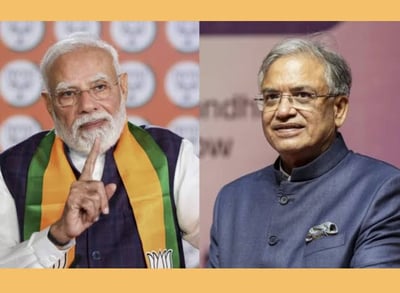
The Kerala government has asked the state Vigilance and Anti-Corruption Bureau to conduct a preliminary inquiry into serious financial allegations involving Chief Election Commissioner Gyanesh Kumar. The order, given directly by the state Home Department, directs anti-corruption officers to verify a fresh complaint claiming that two crore rupees were demanded as an illegal commission during a major highway development contract nearly two decades ago. At the time of the alleged incident, Gyanesh Kumar was serving as a senior civil servant heading the state Public Works Department.
The controversy is connected to work carried out under the Kerala State Transport Project, a high-value infrastructure initiative funded by the World Bank to upgrade critical road corridors across the southern state. During that period, the state government had awarded a two hundred and fifteen crore rupee contract to a joint venture company involving a Malaysian firm to widen and modernise the Main Central Road between Angamaly and Thiruvananthapuram. The road initiative was considered one of the largest public works in the state, drawing continuous monitoring from both international funding agencies and local government bodies.
According to the latest complaint submitted to authorities, a local subcontractor named Sajan VO alleged that senior officials had delayed necessary financial clearances for the ongoing road work. The contractor claimed that approved bills worth approximately seventeen crore rupees, which had already received technical clearance from on-site engineers, were intentionally held back at the administrative level. The complaint asserts that a demand for a payment of two crore rupees was placed before project representatives to release the pending money.
The contractor claimed that the foreign firm refused to pay the demanded amount, leading to severe financial pressure on the ground teams executing the work. The project engineer representing the foreign construction partner, a Malaysian national named Lee See Ben, reportedly faced extreme professional stress due to delayed payments and stalled construction work. The engineer eventually returned to his home country and died by suicide, leaving behind written notes that reportedly mentioned the pressure caused by withheld official funds.
The allegations had been examined by state vigilance officers years ago, but the case was later closed after initial inquiries found no solid evidence of financial wrongdoing. However, the issue resurfaced after senior political leaders, including former state minister Ramesh Chennithala, raised questions regarding why the earlier inquiry had been closed without a complete verification of all claims. When a fresh petition was submitted detailing the allegations once again, the state Home Department decided to seek legal advice and ask vigilance investigators to take a fresh look at the records.
The decision to review the allegations comes at a sensitive time, as Gyanesh Kumar currently occupies the highest constitutional post overseeing general elections across the entire country. The Chief Election Commissioner has not issued any public statement regarding the renewed complaint or the state government order. Legal experts note that constitutional authorities enjoy strong institutional protections, meaning that any state inquiry must follow strict legal procedures when reviewing administrative decisions taken by senior officers decades earlier.
State vigilance officials explained that the current order is strictly for a preliminary verification to check whether any new facts or credible financial proof exist that warrant further legal action. Officers will examine past project files, contractor payment vouchers, file movement logs from the Public Works Department, and previous inquiry closure summaries from the original case. Investigators have maintained that the allegations remain unproven at this preliminary stage, and no formal criminal case has been registered.
The revival of this long-standing case has predictably ignited sharp exchanges between political camps. Leaders from the state government maintain that every formal complaint alleging corruption involving public funds must be examined transparently to protect public trust. On the other hand, representatives from opposing parties argue that digging up twenty-year-old administrative matters against a sitting election chief looks politically motivated and risks weakening important national democratic institutions.
Public interest in the case remains high because large public works projects in India often face scrutiny over delays, contractor disputes, and official approvals. Citizens and civic observers are watching closely to see if the vigilance team uncovers any genuine documentation or if the preliminary inquiry ends up confirming the conclusions reached by investigators years ago.