
Supreme Court Notice to Centre on Legal Immunity for Chief Election Commissioner and Election Commissioners
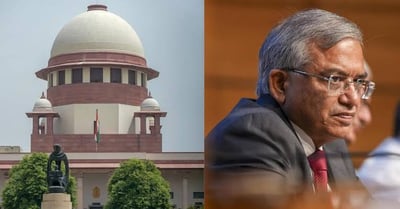
The Supreme Court has issued formal notice to the Central Government to examine the constitutional validity of a legal provision that gives total legal immunity to the Chief Election Commissioner and other Election Commissioners. A bench comprising Chief Justice Surya Kant, Justice Joymalya Bagchi, and Justice Vipul M Pancholi agreed to hear petitions challenging Section 16 of the Chief Election Commissioner and Other Election Commissioners Act of 2023. The legal move opens up a major constitutional review into whether election authorities can remain protected from all criminal and civil actions for decisions taken during their tenure.
The petitions challenging the protection clause were moved by Rashtriya Janata Dal Member of Parliament Manoj Jha and civil rights activist Arun Kumar Agrawal. The petitioners told the top court that Section 16 gives unprecedented and unchecked protection to election officials, placing their administrative actions beyond the reach of normal judicial scrutiny. They argued that the clause takes away the basic constitutional rights of citizens who may suffer due to unfair election decisions, incorrect voter deletions, or administrative partiality.
Under Section 16 of the 2023 legislation, no court can initiate or entertain any civil or criminal proceedings against a present or former Chief Election Commissioner or Election Commissioner for any action taken or purported to be taken in the discharge of official duties. The petitioners pointed out that this broad protection lasts for life and does not include any exceptions, not even for serious allegations of corruption, bad faith, or criminal behavior. They stated that this immunity is even wider than the legal protections granted to the President of India, governors, lawmakers, or higher court judges.
During the hearing, senior counsel representing the petitioners argued that the Election Commission had successfully organized free and transparent elections for more than seven decades without ever having such broad legal shields. They maintained that protecting top officials from harassing or false cases can be easily achieved through standard legal safeguards, such as requiring prior judicial permission or high-level screening before complaints are filed. They argued that giving total immunity from all court action goes far beyond what is necessary to protect the commission's independence.
The petitions also drew attention to how this legal shield leaves ordinary voters without any legal remedy. The plea pointed out that if an eligible citizen has their name wrongfully removed from an electoral roll, or if a political candidate faces intentional bias from election authorities, the law completely blocks them from holding officials legally accountable in a court of law. Such total protection, according to the petitioners, violates the basic structure of the Constitution, particularly the fundamental rights to equality and legal justice.
The history of the provision has also come under sharp question during court arguments. The immunity clause was not present in the original draft of the legislation when the government first tabled the bill in the Rajya Sabha in August 2023. It was added later through an amendment introduced in December 2023 before Parliament passed the law. The petitioners highlighted that the central government offered no public justification or detailed explanation for adding such an extensive legal shield at the last minute.
The Supreme Court directed that the fresh petitions be tagged together with similar pleas filed earlier by advocacy groups, including the Association for Democratic Reforms and the non-profit group Lok Prahari. The court gave the Union Law Ministry and related authorities four weeks to file their detailed responses explaining the constitutional and administrative rationale behind the immunity clause.
The outcome of the hearing is expected to have major consequences for electoral accountability in India. While legal defenders of the law argue that senior officials need full protection to organize massive national polls without fear of post-retirement lawsuits, civil society groups insist that total immunity harms institutional trust. The upcoming judicial review will decide whether election chiefs must remain accountable under regular criminal and civil law like other public servants.