
How Many Students And Farmers Should Die In Protests Just To Convince Modi BJP Government: Sonam Wangchuk To Launch Indefinite Hunger Strike At Jantar Mantar
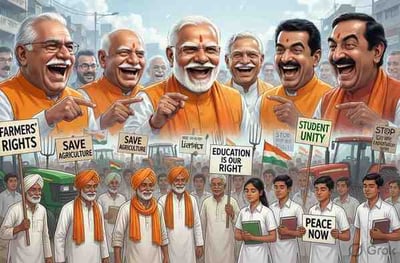
Renowned climate activist, educator, and innovator Sonam Wangchuk has triggered a fresh wave of public mobilization by issuing a definitive warning to launch an indefinite hunger strike at Jantar Mantar in New Delhi from June 28, 2026. Releasing a video statement from outside the United Nations office at the Palais des Nations in Geneva, Switzerland, the prominent activist declared a strict deadline for the central government to take concrete administrative action on key public grievances. Wangchuk stated that he would wait for a formal response from the Ministry of Education and central authorities until the evening of June 27, 2026. If the administration fails to accept accountability or initiate systemic reforms on at least one of his two primary causes, he will immediately return to the national capital to sit on a full scale fast alongside hundreds of young students and civil society representatives.
The primary catalyst for this upcoming hunger strike is an ongoing national youth protest organized by the Cockroach Janta Party, a prominent student movement that has been demonstrating at the Jantar Mantar site for several consecutive days. The student coalition has demanded the immediate resignation of Union Education Minister Dharmendra Pradhan, citing repeated failures in the national examination architecture and severe oversight lapses regarding the widespread NEET undergraduate paper leak allegations. Wangchuk, who has formally aligned himself with the youth agitation, heavily emphasized that regular citizens must possess a definitive, democratic voice in structural decisions that govern the future of national education. He expressed deep concern over the severe mental distress faced by over 2200000 medical aspirants across the country after their hard work was completely undermined by leaking networks, noting that the complete lack of swift institutional accountability from the top leadership is entirely unacceptable.
To draw a powerful parallel to the current student agitation, the developing movement has actively invoked the painful memory of the historic 2020 and 2021 farmers protest against the central agriculture laws. Activists and student leaders at the site reminded the public that over 750 protesting farmers lost their lives on the cold borders of the national capital before the central administration finally agreed to withdraw the controversial legislations. According to verified data compiled by the Samyukta Kisan Morcha, more than 140 of those individuals died strictly due to exposure to bone chilling winter temperatures, pneumonia, and sudden heart attacks while sleeping in open tractor trolleys under severe cold waves. By highlighting how hundreds of rural citizens had to freeze to death at the doorsteps of New Delhi just to convince the political leadership to review its economic policies, the current organizers are arguing that a similar pattern of administrative coldness is now being repeated against young students who are seeking basic fairness in competitive examinations.
Simultaneously, the activist has tied his upcoming fast to the long standing demands of the people of Ladakh, who have been actively campaigning for the restoration of local democracy and structural integration under the Sixth Schedule of the Indian Constitution. Wangchuk ruggedly argued that local communities must be legally consulted on all administrative matters concerning heavy infrastructure growth, environmental protection, and the preservation of their fragile Himalayan cultural heritage. Independent political analysts point out that while combining a localized territorial autonomy movement with a massive, nationwide student examination scandal creates a highly potent narrative for public mobilization, it also faces deep execution risks. Despite these tactical challenges, the announcement has rapidly intensified the political friction surrounding the central education ministry, drawing heavy support from key opposition parties in Parliament who demand an immediate public apology from the education minister over controversial statements targeting the agitating student group