
How Small Town Cricket Dreams Powered India First Global Microchip Empire Under Quest Global Acquisition
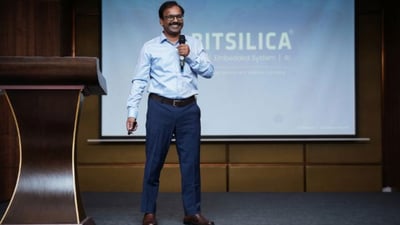
The rapid evolution of the domestic tech ecosystem is producing legendary stories of entrepreneurial success that rival classic cinema scripts. One such extraordinary journey is that of Bhaskar Kakani, the founder and chief executive officer of BITSILICA, whose recent corporate moves have shaken up the global semiconductor landscape. Raised in the small town of Ongole in Andhra Pradesh, Kakani was a passionate street cricket lover who drew his early life inspiration from the movie Lagaan, learning the value of persistence against overwhelming odds. His deep dive into advanced engineering began at the International Institute of Information Technology Hyderabad, where he completed his master of technology degree in VLSI and embedded systems from 2006 to 2008. After sharpening his skills for 15 years at global hardware giants like Synopsys and AMD Xilinx, he took a brave leap to establish his own chip design startup in 2019, navigating initial cash flow struggles by convincing his former employers to become his very first commercial clients.
Within less than 4 years of its initial launch, BITSILICA achieved an elite market ranking by entering the list of the top 20 global semiconductor design service companies. The firm expanded its engineering workforce to over 600 specialized chip designers operating across 5 different countries, including major tech centers in India, Singapore, Malaysia, Vietnam, and the United States. This rapid scaling caught the eye of massive cross border investors, culminating in a definitive corporate milestone in April 2026 when Singapore based engineering giant Quest Global officially acquired BITSILICA. This strategic acquisition aims to build full stack capabilities ranging from initial concept to final silicon software integration. Kakani has actively used this massive corporate platform to advance national technological goals, partnering directly with institutions like Osmania University to co design local microchips showcased by Prime Minister Narendra Modi. Furthermore, his firm is deeply involved in the central government Chip to Startup program, mentoring thousands of student researchers and collaborating with IISc Bengaluru to deploy 5G test bed solutions.
Despite these incredible milestones, the journey highlights systemic structural limitations that remain visible within the domestic semiconductor ecosystem. While BITSILICA has built a phenomenal service network and won consecutive hardware partner awards from Qualcomm, its core business model relies heavily on outsourcing pre silicon design and verification services for external multinational corporations. This service heavy approach leaves domestic entities highly vulnerable to global market fluctuations and sudden shifts in client spending. Furthermore, even though India is currently celebrating a new era with the commercial launch of 3 major semiconductor packaging plants in Sanand, Gujarat, in 2026, the country still faces a massive gap in local high node commercial fabrication foundries. This structural bottleneck means that local designs must still be sent to overseas foundries for physical production, exposing a persistent reliance on foreign manufacturing lines that pure play design achievements cannot fix single handedly.
Moving forward, the successful acquisition of BITSILICA proves that Indian design talent is highly valued on the international stage. The grand challenge for the next generation of tech leaders will be shifting focus from providing high quality engineering labor to building and owning proprietary intellectual property rights. If domestic firms can utilize the massive 8000 crore financial outlay under the newly announced India Semiconductor Mission 2.0 to transition into independent chip product manufacturers, true technological sovereignty can be achieved. Kakani has effectively demonstrated that a small town dream can scale up to global corporate heights, creating a beautiful and functional blueprint for future hardware engineers looking to place India at the center of the global artificial intelligence and hardware revolution.