
Hyderabad Property Registrations Fall Fifteen Percent As Home Buyers Delay Purchases And Total Sales Value Drops
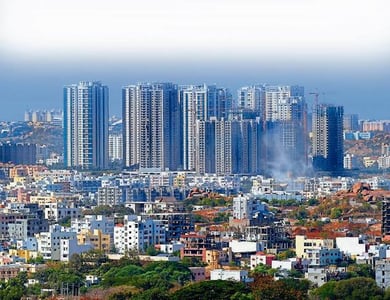
The residential real estate market in Hyderabad has experienced a sharp slowdown in deal activity as home buyers step back from quick purchase commitments. Official government data shows that property registrations dropped by fifteen percent, while the overall financial value of registered residential spaces decreased by seven percent. This noticeable cooling off period marks an important shift for the city, which has spent several continuous years enjoying rapid growth, high investor enthusiasm, and constantly rising flat prices. Today, ordinary families and property investors appear far more careful with their money, preferring to wait for better bargains rather than rushing into expensive home deals.
The slowdown is clearly visible in the latest registration statistics recorded by the state registration department. In the month of September in the year 2026, the city registered a total of five thousand six hundred and twenty property units across its major residential zones. This marks a significant drop when compared to the performance recorded in the month of September in the year 2025, when six thousand six hundred and twelve residential properties were officially registered. Alongside the drop in total unit count, the total financial value of all registered properties fell by seven percent, moving downward from the four thousand eight hundred and four crore rupees recorded during the same period in the previous year.
For an everyday family, purchasing a house is usually the biggest financial commitment of a lifetime. Across neighborhoods in Hyderabad, the cost of land, flats, and independent houses has climbed steadily over the past few years. In many developing suburbs, prices per square foot reached levels that pushed new homes far out of reach for regular salaried workers. When the price of a standard two-bedroom or three-bedroom apartment climbs beyond what a middle-class household earns and saves, prospective buyers have no choice but to put their home buying plans on hold to avoid overburdening their monthly budgets.
Another important reason for the drop in property registrations is the rising cost of construction materials. Over recent years, building firms have had to pay much higher prices for cement, steel, bricks, electrical cables, plumbing items, and transport fuel. In addition, the wages paid to construction laborers and technical supervisors have gone up. Because builders spent significantly more money to build apartment complexes, they raised the selling rates for finished units to protect their profit margins. However, buyers have started pushing back against these higher rates, choosing not to sign sale agreements until prices settle into a more affordable range.
The cost of borrowing money from commercial banks has also played a very big role in slowing down transaction numbers. Most people who buy flats rely heavily on home loans that run for fifteen, twenty, or twenty-five years. When bank interest rates remain firm, the monthly installment that a buyer must pay every month increases by several thousand rupees. A salary earner who could comfortably afford a loan repayment a couple of years ago now finds that a much larger portion of their hard-earned salary would go purely toward paying interest to the bank. This added financial pressure has caused many young working professionals to hold off on taking loans.
The reduction in activity has affected different parts of the city in different ways. In the western IT corridor, including neighborhoods like Gachibowli, Madhapur, Financial District, and Kondapur, luxury homes and high-rise apartments have commanded premium prices for a long time. Even in these wealthy software hubs, high-income technology workers are showing caution with big personal investments. Meanwhile, in the eastern and northern parts of the city where homes are generally more affordable, middle-class families are taking more time to compare builder offers, look for price cuts, and check neighborhood facilities before parting with their savings.
Home buyers have also changed what they look for when choosing a property. In the past, people were willing to book apartments years before construction was complete because early prices were cheaper. Today, buyers are increasingly cautious about construction delays, water availability, road connectivity, and basic civic services. Many families now prefer to purchase ready-to-move-in flats where they can inspect the completed rooms, test the water pressure, and check the neighborhood environment directly. Because ready-to-move flats usually carry higher price tags, transaction numbers have slowed down as people search for completed houses that still fit their savings.
Investor behavior has shifted as well, adding to the fall in total property sales numbers. During earlier property boom periods, wealthy investors bought multiple housing units with the intention of selling them quickly for high profits or renting them out to incoming software professionals. However, as property purchase prices climbed much faster than monthly rental income, the return on investment became less attractive. Rather than tying up large amounts of cash in slow-moving real estate, several private investors have moved their spare capital into other financial options like bank fixed deposits and gold, reducing speculative buying in the housing sector.
State revenue authorities depend heavily on property registrations to generate public funds through stamp duty and registration charges. A drop in registrations naturally reduces the income flowing into government accounts, prompting state administrators to closely monitor housing trends. Independent real estate experts suggest that this period of slower sales could ultimately help the market stay healthy. When home sales slow down, builders are forced to stop raising prices unnecessarily and become more open to negotiation, offering special discounts, free parking spaces, or waiver of registration charges to attract genuine families.
Despite the temporary drop in sales figures, Hyderabad continues to possess strong economic foundations that support future real estate demand. The city remains a premier destination for global technology firms, pharmaceutical manufacturers, and aerospace research centers that create thousands of good jobs every year. Furthermore, ongoing infrastructure projects like outer link roads, highway expansions, and new metro rail phases continue to improve travel times across suburban areas, making distant localities more practical for daily living.
The current fall in registration numbers shows that the real estate sector in Hyderabad is finding its natural balance. For the market to regain strong sales energy, property prices will need to match the actual income levels of working families. When builders and buyers find common ground on affordable pricing, property registrations are expected to stabilize, creating a healthier housing market that benefits genuine home seekers rather than short-term speculators.