
Rupee Value Defense Against Economic Reality Is Useless Warns Former Reserve Bank Governor Duvvuri Subbarao
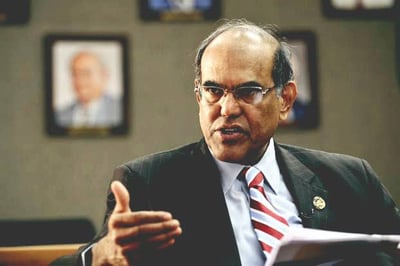
Former Reserve Bank of India Governor Duvvuri Subbarao has shared a clear warning about government attempts to manage the value of the national currency. He stated that trying to correct the exchange rate of the rupee when basic economic conditions point in a different direction is ultimately a useless effort. When global and domestic market realities show that a currency should rise or fall, central banks cannot permanently fight against the natural flow without creating larger troubles for the wider economy. His advice arrives as developing nations around the world continue to face currency movements caused by global trade shifts and strong foreign currencies.
Duvvuri Subbarao served as the head of India's central bank during a challenging period in international finance, holding the top post from the month of September in the year 2008 through the month of September in the year 2013. During his time in charge, the global economy experienced the collapse of major international banks, a worldwide credit freeze, and heavy currency swings across emerging markets. Having handled real currency pressures from the control room of India's monetary system, Subbarao brings deep practical experience to the discussion on how a nation should handle its exchange rate.
To understand why fighting market forces fails, one must look at what financial experts call economic fundamentals. In simple words, fundamentals describe the real health of a country's business activity. This includes how many goods a country exports compared to how many it imports, the pace of price rise in local shops, the total debt of the government, and the overall growth speed of businesses. When a country buys far more foreign items like petroleum, gold, and factory machines than it sells to other nations, it constantly needs foreign money like the United States dollar. That steady demand naturally makes foreign currency stronger and the domestic currency weaker.
When the rupee starts to drop in value against foreign currencies, public anxiety and political pressure often push the central bank to jump into the market. Many people mistakenly view a lower rupee as a loss of national strength. To stop the fall, the central bank can open its vault of foreign cash reserves, sell United States dollars into the open market, and buy up Indian rupees. This artificial buying creates temporary demand that stops the currency from dropping for a brief time. However, Subbarao reminds everyone that these foreign cash reserves are not bottomless. Spending billions of dollars just to defend an artificial price tag leaves the nation with less protection if a severe global crisis arrives later.
The former central bank chief made an important distinction between calming down sudden panic and trying to change the natural direction of the currency. Central banks have a sensible duty to step in when currency speculators cause sudden, chaotic drops over a few hours. Quick and wild price swings can scare regular traders and hurt daily business transactions. Stepping in to smooth out those sharp daily bumps is good and normal policy. But Subbarao emphasized that trying to keep the rupee fixed at a high level when underlying economic conditions demand a lower value is completely futile. In the end, the open market always discovers the true price.
Keeping the rupee artificially strong can also bring hidden harm to domestic producers and working families. When the currency is held at an unrealistically high price, goods made in India become more expensive for foreign customers. Exporters who sell clothes, footwear, engineering parts, computer services, and agricultural produce struggle to compete against sellers from other countries whose currencies have adjusted naturally. At the same time, cheaper foreign products flood into domestic markets, making it hard for local Indian factories to survive. Allowing the currency to adjust naturally acts as a cushion that keeps local businesses competitive and protects manufacturing jobs.
A falling rupee does bring real challenges for ordinary consumers, which explains why administrators worry about currency drops. India buys a massive share of its crude fuel, cooking oils, electronics, and fertilizers from foreign suppliers. When the rupee loses ground, these foreign items cost more to bring into the country. That leads to higher travel costs, costlier food supplies, and larger household bills. Subbarao recognizes these everyday struggles, having dealt with painful price rises during his own leadership years. Even so, his core argument remains firm: the only sound way to control high prices is to expand local manufacturing, reduce government budget waste, and improve supply chains, rather than forcing an artificial number on currency screens.
Economic history across the globe offers many cautionary tales of nations that tried to fight market forces. Several developing countries in Southeast Asia and South America once drained nearly all their emergency foreign money reserves in desperate bids to protect their exchange rates. In almost every situation, global currency markets saw through the artificial defense, leading to a sudden, massive collapse that wiped out bank savings and ruined businesses overnight. A steady, gradual adjustment that mirrors real economic output is far safer than a sudden crash caused by empty foreign reserves.
International investors also pay close attention to how a country treats its money. When global business leaders see that a central bank permits its currency to find a natural level based on genuine demand and supply, their trust in that market increases. They feel secure knowing they can invest capital and withdraw earnings without running into sudden state controls or manipulated rates. A flexible currency system shows financial maturity and an ability to absorb international shocks. Heavy-handed attempts to fix the rupee at an artificial level can frighten foreign investors, who worry about getting trapped behind artificial rules.
The lasting strength of the rupee will not come from central bank intervention in currency trading rooms, but from factories, farms, and modern technology centers across the country. Subbarao's message reminds everyone that a strong currency is the natural outcome of a competitive economy, not the cause of it. If India wants a steady and respected rupee, the country must expand exports, build domestic green energy to cut foreign oil bills, modernize transport ports, and maintain steady prices in neighborhood markets.
The straightforward observations of the former central bank leader provide valuable guidance for current policymakers, financial analysts, and everyday citizens. Currency exchange rates are not trophies to be defended at any financial cost. They are practical prices that reflect national productivity, trade flows, and economic discipline. Paying attention to experienced voices like Duvvuri Subbarao helps the country focus on real long-term economic growth rather than short-term cosmetic currency numbers.