
INDIA Bloc Opposition Strategy: Marching Separately But Striking Together On Exam Leaks
1. Title seo friendly
INDIA Bloc Opposition Strategy: Marching Separately But Striking Together On Exam Leaks
2. Excerpt must be seo friendly
3. Content
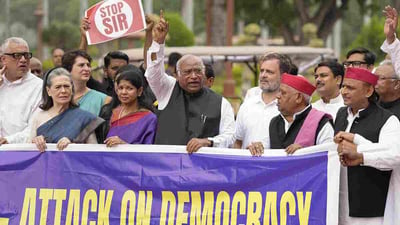
A subtle yet coordinated political strategy unfolded across the capital on July 21, 2026, as constituent parties of the opposition INDIA bloc put into practice a time tested tactical approach. Following a high level morning consensus meeting regarding the nationwide student agitations over question paper leaks, opposition leaders agreed that their support needed to extend beyond traditional parliamentary floor protests. Rather than organizing a single joint procession, individual alliance members deployed distinct regional and party mechanisms across multiple venues in New Delhi, putting into practice the classic political principle of marching separately while striking toward a single unified objective.
The multi pronged strategy visible on July 21, 2026, allowed different constituent parties to maximize their specific strengths without colliding over procedural logistics. While Congress Leader of Opposition Rahul Gandhi led a high profile demonstration near the residence of the Prime Minister and later visited injured students at Ram Manohar Lohia Hospital, Samajwadi Party chief Akhilesh Yadav synchronized his message directly from the steps of Parliament. Simultaneously, parliamentarians from the Left parties, including the Communist Party of India and Communist Party of India Marxist, took to the ground at Jantar Mantar to engage directly with student groups protesting the NEET-UG examination irregularities.
This decentralized approach offered tactical flexibility for an alliance that has often struggled with internal friction over seat sharing, state level rivalries, and competing public statements. By choosing not to force a rigid single banner march, the opposition avoided public disagreements over leadership order or route planning. Instead, the synchronized messages delivered across different locations forced parliamentary proceedings in both the Lok Sabha and Rajya Sabha to hit repeated logjams, compelling the government through Union Minister Kiren Rijiju to publicly announce its readiness for an open debate on the examination integrity issues.
While this distributed protest model effectively disrupted parliamentary business and kept the administration under pressure, maintaining long term coherence without a single operational command remains a complex structural challenge. Decentralized actions run the risk of sending mixed signals if individual party agendas diverge during critical legislative votes. However, as the Monsoon Session progresses, this tactical flexibility demonstrates that the opposition alliance can achieve significant political momentum on national public issues by coordinating goals while operating through independent political channels.