
India Boosts Domestic LPG Output Plan To Secure Cooking Gas Supply
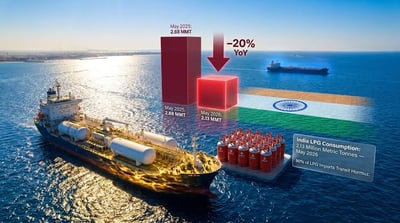
India is taking major steps to bolster its energy security by directing domestic oil refiners and crude producers to implement all technically and economically feasible measures to maximize liquefied petroleum gas production. The strategic move aims to shield households and commercial sectors from severe import disruptions caused by ongoing conflict and maritime trade blockages along the Strait of Hormuz, a narrow sea lane through which the country historically sourced ninety percent of its imported cooking gas. With import routes facing severe vulnerability, central energy authorities have instructed facility managers to push domestic output far beyond standard baseline capacity targets.
Before recent trade bottlenecks emerged, domestic refiners across the nation produced roughly 36,000 tons of liquefied petroleum gas each day. Early intervention efforts successfully pushed that output up to around 54,000 tons per day. However, the latest official directive sets a significantly higher upper limit capability of 63,810 tons per day across public and private refineries as well as upstream gas processors. Under this framework, facility-specific targets have been established. Reliance Industries' domestic market refinery in Jamnagar received the largest individual mandate at 18,000 tons daily, while state-owned refiners and energy explorers including Oil and Natural Gas Corporation, Oil India, and GAIL India will contribute substantial shares to reach the national goal.
Historically, the nation relied heavily on foreign suppliers for cooking gas because domestic refinery economics favored higher margin fuels like gasoline and specialized petrochemical feedstocks over liquefied petroleum gas. In typical years, imported volumes accounted for over sixty-four percent of total domestic consumption. The recent shipping vulnerabilities along Middle Eastern transit corridors forced a drastic policy shift toward domestic self-reliance. Refiners are now converting naphtha streams into cooking gas and upgrading cracking units to ensure that essential fuel production takes priority over non-essential industrial derivatives.
The government initiative extends beyond immediate refinery output adjustments. Oil companies have been ordered to rapidly expand regional infrastructure for storage, evacuation, and bulk transportation. This structural expansion ensures that newly generated domestic supplies can move efficiently from coastal and inland refineries to consumer distribution networks without bottlenecking. To ensure compliance and adapt to changing conditions, official authorities plan to review these facility-wise production targets every six months, establishing a durable framework capable of managing energy crises over the long run.
Through these comprehensive production and logistics measures, energy administrators aim to keep retail supplies stable, avoid panic buying among millions of households, and reduce exposure to unpredictable international maritime shocks. By transforming temporary emergency protocols into a structured, long-term policy, the nation is actively insulating its economy and domestic consumers from external global market disruptions.