
Indian currency sink to ninety seven soon cross one hundred while Modi busy in Meloni with chocolate melody
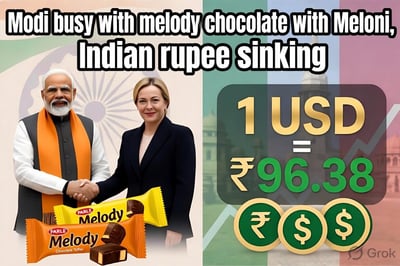
The domestic currency market has entered a state of significant uncertainty as the Indian money value plunged to an all time low reaching nearly ninety seven against the United States dollar. Financial analysts and citizens are increasingly worried that the local unit could soon cross the psychological threshold of one hundred per dollar if the current downward trend persists. This sharp depreciation is primarily driven by external macroeconomic pressures including a steep rise in global crude oil prices and heavy capital flight by foreign portfolio investors who are pulling funds out of local assets in search of safer yields abroad. Because the country imports a vast majority of its energy requirements paying for expensive crude in a strengthening foreign currency creates an unsustainable fiscal strain that directly impacts the strength of the domestic market.
While the public expresses deep worry over the cascading effects of this financial decline on household budgets the political arena presents a sharply contrasting narrative. Prime Minister Narendra Modi is currently occupied with high level international diplomacy engaging in meetings with foreign leaders such as Italian Prime Minister Giorgia Meloni. This juxtaposition has sparked intense public commentary and satirical reactions across digital media platforms where citizens observe top leadership sharing lighthearted moments and diplomatic gestures overseas while the core financial foundation of the nation faces a severe trial. The visible detachment between pressing domestic financial struggles and celebratory international summits has intensified discussions regarding the timing and focus of administrative priorities during an economic crunch.
A closer inspection of the economic landscape indicates that standard central bank interventions are facing visible limitations against global market forces. The Reserve Bank of India has actively entered the market by selling foreign reserves to cushion the sudden fall and prevent speculative panic among domestic trading houses. However these defensive maneuvers only manage short term volatility rather than addressing the structural issues of imported inflation and rising manufacturing costs. While a depreciating currency theoretically offers a slight advantage to local exporters by making their goods cheaper globally the immediate consequence for the domestic population remains an inflation shock that drives up the cost of everyday commodities electronics and fuel.
Ultimately the transition of the exchange rate toward ninety seven serves as an unambiguous warning for regulatory bodies and economic planners. Relying strictly on foreign exchange market interventions cannot permanently insulate the domestic economic framework from prolonged global energy disturbances and shifting international investor sentiment. As the possibility of the currency reaching one hundred looms closer the administrative focus needs to pivot from international diplomatic engagements toward aggressive domestic reforms. Strengthening fiscal discipline reducing structural import dependencies and fostering a more stable environment for local manufacturing are vital measures required to rebuild confidence in the national monetary system.