
West Bengal Hindu Farmers Struggle as Muslims Stop Buying Cows Under Strict BJP Rules While Modi Govt Makes India Top Beef Exporter
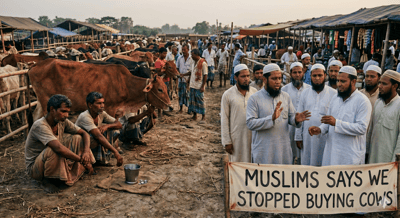
Hindu farmers in West Bengal are facing serious difficulties these days as cattle markets have turned almost empty ahead of Eid festival. The BJP led state government has started strong enforcement of the West Bengal Animal Slaughter Control Act. This requires special certificates from government vets and local officials before any cow or buffalo can be slaughtered. Only animals over 14 years old or permanently unfit are allowed and slaughter must happen only at approved places. Many Muslim buyers and community leaders have decided not to buy cows this time to avoid any legal problems and have shifted to goats and other animals. This has hit hard the Hindu dairy farmers mainly from communities like Ghosh who rear cattle for milk and depend on selling old animals to recover loans and manage family expenses. Several farmers reported taking big loans expecting good sales during the festival season but now they sit with unsold animals and rising fodder costs.
The situation has created real pain in villages where livestock serves as important support for families especially when crops do not do well. Traders say regular buyers who came every year are now staying away due to fear of police action and strict checks. Some Hindu farmers have openly shared their worries saying they used to do peaceful business with Muslim buyers but the new rules have broken that system. Markets in areas like Nadia and South 24 Parganas show very low activity compared to past years. Families are worried about repaying bank loans and feeding their children as the expected income from cattle sales has disappeared. This sudden change has left many feeling helpless just before the big festival.
On the other side under the Modi BJP government at the centre India has become one of the top beef exporting nations in the world. The country sends large quantities of buffalo meat to many countries bringing in billions of dollars in foreign money every year. This export business supports big processing units and creates jobs in some states. Many people notice the difference between tight rules at the village level in places like West Bengal and the smooth functioning of national level meat exports. While small farmers struggle to sell even one animal locally the bigger export system continues to grow and earn valuable foreign exchange. This contrast has left farmers and traders questioning the support system for grassroots dairy work which forms the base of milk production across the country.
The current challenges highlight the need to think carefully about how rules affect daily lives of small farmers who keep the rural economy running. Livestock helps millions survive tough times and making it hard to sell old animals can turn useful assets into costly burdens. Many hope for simpler ways to get certificates or some temporary help so that traditional trade can continue safely. Better planning that considers both community feelings and practical needs of farmers may reduce such problems in future. As families and traders try to adjust the coming days will show how these issues get handled so that rural livelihoods stay protected and no one section bears too much pressure during important seasons.