
Iran Says It Hit US Military Targets In Bahrain And Kuwait As Regional Escalation Deepens
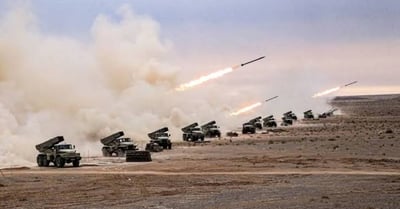
Military confrontation across the Gulf region reached a dangerous high point on July 21 2026 as Iran Islamic Revolutionary Guard Corps IRGC formally declared that its forces launched targeted missile and drone strikes against United States military installations situated in Bahrain and Kuwait. State media outlets including IRNA and IRIB reported that Iranian aerospace units executed fresh waves of retaliatory operations aimed at degrading American defensive infrastructure. According to official claims released by the IRGC, the strikes focused on destroying missile defense radar systems, satellite communication facilities, and early warning units, specifically targeting US assets hosted at Ali Al-Salem Air Base, Camp Arifjan, and Ahmad Al-Jaber base in Kuwait, alongside naval and drone infrastructure at Salman Port and Sheikh Isa Air Base in Bahrain.
The military escalation comes in direct response to an intense 10th consecutive night of United States airstrikes across southern Iranian provinces, ordered by US President Donald Trump. US Central Command CENTCOM confirmed that American naval and air forces conducted heavy bombardment runs on command centers, coastal surveillance sites, and launch facilities in cities including Shiraz, Konarak, and Chabahar. US authorities framed the ongoing offensive as an effort to protect international shipping lanes in the strategic Strait of Hormuz and degrade Iranian strike capacity. However, Iranian military officials asserted that their multi directional drone and missile barrages were launched to demonstrate that host nations supporting American military operations would remain within firing range.
The broader implications of these strikes extend far beyond military targets, severely impacting critical civilian infrastructure across the Arabian Peninsula. Regional defense authorities in Kuwait confirmed that incoming aerial projectiles caused physical damage to key power and water desalination facilities, igniting fires and raising severe concerns regarding national water security. Simultaneously, Iranian forces claimed responsibility for striking data infrastructure in Bahrain and targeting commercial shipping passing through the Strait of Hormuz. With a tanker taking fire off the coast of Oman and crew members forced to evacuate on lifeboats, the conflict has further choked off global oil transit, pushing international energy markets into heightened volatility.
Analyzing the broader strategic landscape, Tehran military choices reflect a calculated doctrine aimed at pressuring Washington through regional proxies and neighboring partners while attempting to mitigate total devastation on its domestic core. By striking military outposts hosted inside Gulf states, Iran seeks to raise the political cost for regional governments harboring American forces. However, targeting dual-use civilian assets like power grids and maritime shipping risks alienating neighboring nations and inviting broader international involvement. While backchannel diplomatic exchanges via Omani and Pakistani mediators continue to float temporary ceasefire frameworks, the cycle of heavy aerial bombardment and regional retaliatory strikes makes long term stability increasingly difficult to secure without immediate international intervention.