
US President Donald Trump Rebuts New York Mayor Threat To Arrest Israeli Prime Minister Benjamin Netanyahu
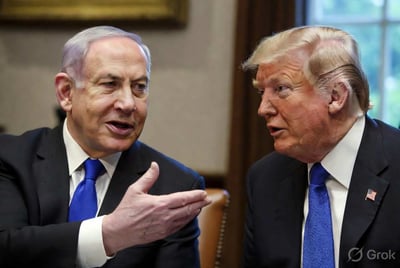
A major diplomatic and political friction point emerged in Washington on July 20 2026 as US President Donald Trump issued a firm public statement regarding the upcoming visit of Israeli Prime Minister Benjamin Netanyahu to the United States. The controversy erupted after New York City Mayor Zohran Mamdani stated in a public interview that his administration was actively consulting with the city law department to determine if local authorities could enforce an International Criminal Court arrest warrant against Netanyahu. The Israeli leader is expected to travel to New York in September 2026 to address the 81st session of the United Nations General Assembly. Responding via a direct social media post, Trump stated unequivocally that the Israeli prime minister will not be arrested in any way, shape, or form while staying on American soil, effectively shutting down speculation regarding municipal intervention against a visiting head of state.
The root of the disagreement traces back to November 2024, when the International Criminal Court in The Hague issued an arrest warrant for Netanyahu related to alleged war crimes during the conflict in Gaza. During his campaign and subsequent administrative tenure, Mayor Mamdani repeatedly categorized Netanyahu as a war criminal and asserted that municipal law enforcement should uphold global legal standards where applicable. In his recent remarks, Mamdani emphasized that while he intends to strictly follow existing New York laws and respects official diplomatic frameworks, his team is conducting an active legal review to assess what authority local police might hold if a wanted international figure enters the city jurisdiction.
However, constitutional and legal experts quickly pointed out significant legal barriers to any local attempt to detain a foreign head of state. Under established US constitutional law, foreign policy and diplomatic relations fall under the exclusive jurisdiction of the federal government rather than individual municipal mayors. Furthermore, because neither the United States nor Israel is a member state of the International Criminal Court or a signatory to the Rome Statute, federal authorities hold no legal obligation to execute warrants issued by The Hague. Visiting foreign leaders attending the United Nations General Assembly in Manhattan are additionally protected by standard international diplomatic immunity laws enforced by federal agencies.
This public dispute highlights a growing ideological divide within American political discourse concerning international accountability and foreign affairs. While local progressive officials attempt to leverage municipal authority to align with international judicial bodies, the executive branch maintains complete control over foreign diplomacy and national security decisions. Trump remarks reaffirmed strong diplomatic alignment with Israel, praising its military posture against regional adversaries while dismissing municipal threats as legally invalid. As the September gathering of world leaders approaches, the incident underscores the strict boundaries separating federal foreign policy mandates from local city administration.