
Iran War Militarily Effectively Over Says Donald Trump Following White House Meeting With Qatar Prime Minister While Tehran Calls Claims Fake News
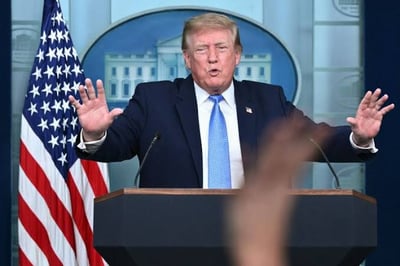
President Donald Trump has announced that the heavy military fighting against Iran has reached its practical end following high stakes diplomatic meetings held at the White House. Speaking directly to reporters after a private discussion with the visiting Prime Minister of Qatar, the American leader explained that direct warfare has slowed down significantly. He stated that his team prefers to keep the current balance in place because regional partners in the Middle East desire calm and want to avoid wider armed clashes across the territory. The sudden remarks represent one of the clearest signs yet that Washington wants to step back from fresh large scale air strikes in the region.
The key foreign leader inside the Oval Office was Qatari Prime Minister Sheikh Mohammed bin Abdulrahman Al Thani, who has served as the chief peace mediator between Washington and Tehran. Qatar has spent weeks carrying messages back and forth between the two sides in an effort to stop more bombings and secure an agreement. Following the meeting, the Qatari leader noted that constructive discussions took place on finding a path to end hostilities and build lasting stability. Observers say the personal presence of Qatar top diplomat in the American capital reflects how close the parties are to testing whether diplomacy can replace battlefield weapons.
Donald Trump maintained an assertive tone while describing the military position of Iran, telling reporters that major hostile units had suffered crushing blows to their command structures, naval vessels, and defensive installations. He claimed that further attacks are quite unlikely as long as progress continues through diplomatic channels. At the same time, the American president stressed that American forces stationed nearby remain completely prepared and equipped if hostilities flare up again. He emphasized that preventing Iran from creating a nuclear device remains an absolute requirement that cannot be compromised.
The response from Iranian officials arrived swiftly, rejecting the American president version of reality with sharp words. Top Iranian security figure Mohsen Rezaei took to public communication channels to dismiss the comments, calling the narrative of friendly peace negotiations completely false. Iranian representatives declared that Washington is fabricating claims of easy negotiations to cover up political trouble at home. They asserted that any genuine end to the crisis requires the United States to fulfill several strict demands, including an end to financial sanctions, unfreezing locked money reserves, and stopping naval blockades in regional waterways.
This sudden diplomatic push comes right after major political developments inside the United States, where the Republican Party faced significant losses in nationwide midterm voting. Public weariness over overseas military campaigns, combined with sharp rises in petroleum costs and household expenses, created strong discontent among regular American citizens. Analysts note that ending active military operations allows the administration to focus on domestic economic stability and lower world energy prices, which had spiked during months of direct tension around vital oil transit lanes.
Neighboring Gulf nations such as Saudi Arabia, the United Arab Emirates, and Kuwait have strongly urged Washington to pursue peace rather than escalate attacks. These countries worry that prolonged bombardment could lead to retaliatory rocket strikes on commercial oil fields and civilian shipping routes. By consulting these regional partners, the White House has chosen to freeze military actions while letting mediators work out acceptable compromises on trade, security, and borders.
Financial markets reacted immediately to the cooling tone coming from Washington. International crude oil values dropped sharply once news of the White House statements spread, bringing relief to trading hubs and manufacturing industries worldwide. Investors hope that stable energy supplies will reduce transportation prices and bring down everyday inflation for families across the globe. Even a short pause in armed clashes has helped restore investor confidence in global logistics and merchant shipping routes.
Despite the hopeful words from political leaders, defense analysts caution that reaching a signed peace treaty will be very difficult. Foreign ministers from allied nations noted that the basic demands from both capitals remain miles apart. The United States wants clear international inspections and a complete dismantling of atomic facilities, while leaders in Tehran demand complete freedom from foreign trade restrictions and an end to foreign military presence near their borders.
For everyday civilians living across the Middle East, the talk of ending military action brings a deep sense of relief after months of uncertainty and destruction. Ordinary families in towns and villages have lived through continuous fears of rocket attacks, closed airspace, and sudden shortages of basic goods. While top officials in faraway capitals argue over terms and treaties, the people on the ground simply want safe skies, open roads, and an opportunity to rebuild their regular lives in peace.
The next few days will test whether the diplomatic efforts mediated by Qatar can produce a binding framework or if disputes will resurface. For now, both armies have pulled back from active escalation, leaving the field open for diplomats to negotiate over documents instead of firing missiles across border lines.