
Iranian President Masoud Pezeshkian States Tehran Does Not Seek Wider War While Defending National Security
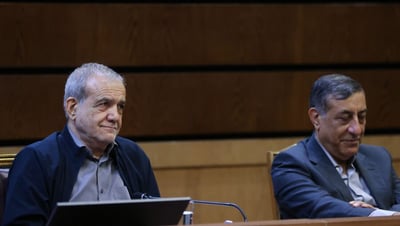
he political climate in West Asia reached a crucial juncture as Iranian President Masoud Pezeshkian publicly declared that Tehran has no desire to expand ongoing regional conflicts into a wider war. Speaking during an official medical program inauguration in Tehran, the Iranian president clarified that his government remains focused on defending its territorial borders and safeguarding national security while avoiding unnecessary military escalation. The statement arrived as diplomatic channels operated by regional mediators from Qatar, Oman, and Pakistan attempted to coordinate initial negotiation drafts between foreign representatives. While United States President Donald Trump claimed that high-level discussions were actively taking place, Iranian Foreign Ministry spokesman Esmaeil Baqaei clarified that official direct talks with Washington were not occurring, noting that diplomatic exchanges were primarily directed through Omani channels regarding shipping access in the Strait of Hormuz.
The statement from the Iranian leadership follows a series of military exchanges across the region that heightened security fears for global transport networks. Reports indicated that the Islamic Revolutionary Guard Corps targeted a United States military installation in Kuwait using three unmanned drones, while heavy explosions were also recorded near Basra province along the border region. Despite these active military encounters, international diplomatic outreach managed to prevent an immediate large-scale bombing campaign after regional partners—including Saudi Arabia, Qatar, and the United Arab Emirates—urged Washington to allow time for diplomatic dialogue. Iranian President Masoud Pezeshkian emphasized that building internal social resilience and economic strength remains essential so external powers cannot exploit domestic vulnerabilities or disrupt national unity during volatile times.
Simultaneously, the strategic waterway of the Strait of Hormuz remains at the center of ongoing security discussions and global economic concerns. Iranian naval forces have maintained restricted passage through the narrow corridor, which regularly handles roughly 20 percent of international petroleum shipments, in response to military strikes and economic sanctions. United States Treasury Secretary Scott Bessent indicated that negotiators are attempting to finalize a temporary agreement aimed at guaranteeing safe commercial vessel transit through the waterway. However, conflicting signals between Tehran and Washington regarding whether formal negotiations are taking place reflect deep institutional distrust. While Iranian officials insist that talks are confined strictly to regional maritime safety coordinated through Omani officials, American leadership continues to advocate for broader talks covering nuclear development and long-term economic agreements.
The complex dynamic between public rhetoric and private diplomatic messaging illustrates the delicate balance maintained by all participating leadership teams. Public statements disavowing a wider war allow Iranian authorities to reassure domestic citizens and regional neighbors while maintaining a strong military posture along national borders. At the same time, maintaining military pressure around critical transport routes provides Tehran with significant bargaining leverage during indirect diplomatic exchanges. For the United States and regional partners, preventing a full-scale military escalation remains vital for maintaining international oil market stability and avoiding prolonged economic turmoil. The reliance on regional mediators highlights how indirect diplomacy can help manage high-stakes security risks even when formal bilateral relations remain frozen.
The ultimate success of these diplomatic maneuvers depends on whether both sides can establish clear operational boundaries along disputed transit channels. While a temporary understanding on maritime passage in the Strait of Hormuz would provide immediate relief to international trade networks, underlying disagreements regarding national security and regional presence require sustained political commitment. As regional mediators continue exchanging proposal drafts between official delegates, the international community remains watchful for concrete signs of de-escalation. Navigating this fragile balance between military deterrence and diplomatic dialogue will determine whether West Asia moves toward sustainable regional stability or remains exposed to sudden security shocks.