
Russia Ukraine War Escalates As Cross Border Drone And Missile Strikes Kill 27 In Latest Overnight Assault
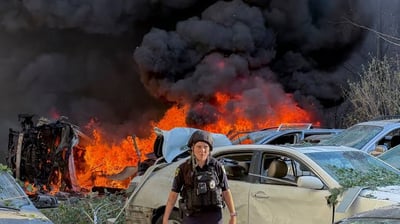
A devastating wave of long-range cross-border strikes brought fresh destruction across Eastern Europe, leaving at least 27 civilians and emergency workers dead across multiple regions. The escalation involved heavy barrages of explosive drones, guided glide bombs, and artillery shelling executed simultaneously by both military forces. In the Moscow region, Russian officials reported that five people were killed and six others injured after Ukrainian strike drones managed to penetrate air defense corridors during early morning hours. Further south in the Krasnodar region, falling drone debris struck the coastal community of Arkhipo-Osipovka, causing a fire that killed seven civilians—including three children—and injured 40 others. Additional strikes were reported in occupied Crimea and the border territory of Belgorod, where local administrative centers confirmed eight total fatalities from incoming artillery and aerial bombardment.
Inside Ukraine, civilian communities faced severe destruction as Russian forces unleashed coordinated aerial attacks against energy grids and urban residential districts. In the Kryvyi Rih district of the Dnipropetrovsk region, a targeted Russian strike ignited a massive inferno at a commercial fuel station, killing three people—including an emergency responder and his eight-year-old son caught in the immediate blast zone. Healthcare officials confirmed that 21 people suffered severe burn injuries during the fuel station explosion, with nine patients remaining in critical care. Simultaneously, in the southern region of Zaporizhzhia, eight civilians, including two children, were killed when Russian military aircraft dropped multiple heavy glide bombs directly onto residential housing blocks, forcing emergency crews to use heavy machinery to pull survivors from collapsed concrete structures.
This lethal exchange underscores the changing tactical dynamics of the conflict, where both sides rely heavily on uncrewed aerial technology to strike targets deep behind active front lines. For Ukraine, expanding long-range drone operations deep into Russian territory represents a calculated strategy to disrupt supply lines, hit military logistics, and bring the direct reality of war to the domestic population. Conversely, Russia continues utilizing its massive stockpiles of heavy glide bombs and ballistic missiles to overwhelm Ukrainian civilian air defense networks. Ukrainian leaders have repeatedly warned that critical shortages of specialized air defense interceptors leave regional cities vulnerable to saturation attacks, creating severe humanitarian risks for ordinary residents living far from primary military trenches.
The tragic civilian casualties recorded across both sides highlight the growing human cost of a conflict entering its fifth year without a clear diplomatic resolution. While international diplomatic efforts intermittently attempt to establish framework discussions, the continuous cycle of retaliation breeds further destruction and civilian suffering. Targeting urban hubs, energy infrastructure, and transport nodes causes severe psychological trauma to local populations while straining local emergency services. Until international powers successfully establish enforceable agreements to protect non-combatants, civilian communities on both sides of the border will continue bearing the primary burden of this long war.