
Is BCI Chairman Pro BJP Move Behind NALSAR Law Graduates Enrolment Ban Row As Supreme Court Slams Directive
An unprecedented institutional confrontation has shaken the legal establishment after the Bar Council of India attempted to block graduating students of the premier National Academy of Legal Studies and Research in Hyderabad from entering the legal profession. The regulatory body issued a nationwide directive instructing all state bar councils to withhold advocate enrolment for the entire outgoing batch. The harsh measure was triggered after more than four hundred students submitted formal representations opposing the administration decision to invite Chief Justice of India Surya Kant as the chief guest for their annual convocation ceremony. The students chose to peacefully register their protest by declining to participate in the event, citing concerns over previous judicial remarks concerning youth protests and civil liberties.
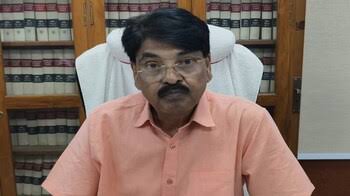
The controversial move by the regulatory authority instantly sparked fierce political and constitutional debates across the legal community. The chairman of the Bar Council of India, Manan Kumar Mishra, is a sitting Member of Parliament representing the ruling Bharatiya Janata Party in the Rajya Sabha. Critics, constitutional experts, and opposition leaders questioned whether the statutory body was being utilized as an instrument to showcase political allegiance and suppress legitimate academic dissent. The initial notification termed the peaceful student representation an organized campaign of disrespect, warning that individuals demonstrating dissent against the highest judicial office were unfit to join the legal fraternity. This sweeping assertion alarmed senior advocates who viewed it as a dangerous expansion of regulatory power designed to instill fear among young scholars.
The controversy took a decisive turn when Chief Justice of India Surya Kant personally intervened in open court, delivering a blistering rebuke to the statutory authority. Presiding over a Supreme Court bench, the Chief Justice asserted that the regulatory council had no business interfering in an issue that was fundamentally an ongoing dialogue between the students and his office. Drawing upon his own background as an active student leader, the Chief Justice emphasized that young citizens in a constitutional democracy possess an inalienable right to voice dissent and hold differing opinions. The apex court bench barred any punitive or coercive action against NALSAR students and faculty members, highlighting that disagreement on campus should be met with institutional maturity rather than administrative retribution.
Legal scholars and advocates across several high courts pointed out that the directive violated the core statutory framework established under the Advocates Act. Under Indian law, the primary authority to evaluate applicants and admit candidates onto the rolls of advocates rests exclusively with individual State Bar Councils rather than the central regulatory council. Barring an entire class of graduating students preemptively without any statutory inquiry, individual notice, or formal hearing represents an arbitrary exercise of power. Eminent jurists noted that students earn their degrees through rigorous academic study and standard examinations, and their professional livelihoods cannot be held hostage to satisfy administrative egos or political calculations.
Confronted with massive public outrage, unified condemnation from legal associations, and explicit censure from the highest judicial bench, the Bar Council of India was forced to execute an immediate retreat. Within hours of issuing the contentious freeze, the council released a modified communication rescinding the restriction and confirming that all graduating students remain entirely eligible to register with the state councils of their choice. The council later declared the entire matter closed, attributing the initial confrontation to external instigation while exonerating the student body. The rapid collapse of the directive has renewed calls for statutory reform, transparency in regulatory governance, and stronger safeguards to protect academic freedom from external political interference.