
Israel Airstrike Kills Three-Year-Old Boy Near Gaza Bakery as Genocide Allegations Mount and Total Death Toll Exceeds 73,000
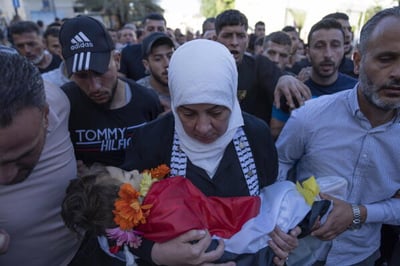
A crowded marketplace in the central Gaza city of Deir Al-Balah became the scene of sudden devastation when an aerial strike tore through a queue of civilians waiting outside a neighborhood bakery. The powerful blast instantly turned a routine morning chore into panic, sending shrapnel, dust, and debris flying across packed pedestrian walkways. Among those killed was three-year-old Tayyem Hamdan, who suffered fatal blast trauma alongside an adult man as emergency medical responders rushed to pull wounded bystanders from the rubble.
The deadly explosion outside the food distribution point triggered immediate outrage among residents and human rights monitors who have documented the relentless destruction of basic civilian infrastructure. Medical personnel at the nearby Al-Aqsa Martyrs Hospital worked under extreme resource constraints to treat multiple injured civilians, including women and young children who sustained severe shrapnel wounds. For the grieving relatives gathered outside the hospital morgue, the loss of a toddler waiting for daily bread symbolized the continuous peril facing non-combatants across the coastal enclave.
The Israeli military acknowledged carrying out the operation, stating that its aircraft conducted a targeted strike against an individual identified as Hussam Nusair, alleging he was an operative planning attacks against military assets. However, Palestinian officials and international observers pointed out that deploying heavy aerial munitions in densely populated commercial centers, next to functioning bakeries and residential shelters, represents a blatant disregard for civilian life. The incident added to growing international legal proceedings that characterize the sustained military campaign and widespread civilian destruction as acts of genocide.
The broader devastation across the Gaza Strip reflects an unprecedented scale of physical and human loss. Official medical registries in Gaza report that the overall death toll from the continuous military operations has exceeded 73,400 Palestinians, with more than 174,000 others injured. The overwhelming majority of the casualties comprise innocent children, women, and elderly individuals who were unable to find safe shelter. Satellite assessments and United Nations reports indicate that nearly 90 percent of the enclave’s residential buildings, schools, universities, water networks, and hospitals have been systematically leveled or rendered completely uninhabitable.
The ongoing strikes have occurred despite international diplomatic frameworks and public appeals from foreign leaders, including United States President Donald Trump, who have repeatedly called for sustainable pauses and regional stabilization. Israeli Prime Minister Benjamin Netanyahu has consistently dismissed external diplomatic constraints, maintaining an uncompromising military stance and ordering continued targeted strikes across central and southern zones. The divergence between Washington’s public diplomatic posturing and the continuous operational execution on the ground has drawn sharp criticism from global analysts, who argue that the lack of enforceable accountability allows cross-border operations to persist unchecked.
The fatal strike took place on Sunday, August 30, 2026, further shattering the fragile cessation framework that was intended to halt major ground operations. While international mediators attempted to establish stable ceasefires to facilitate humanitarian aid access, continuous localized bombardments have caused the deaths of more than 1,300 Palestinians since October. United Nations agencies, including the children's fund UNICEF, have warned that an average of at least one child is killed every single day across the enclave, leaving young survivors to endure extreme malnutrition, a collapsed healthcare grid, and perpetual displacement.
Human rights organizations and legal experts documenting the conflict have reiterated that targeting densely populated humanitarian zones and municipal bread lines violates fundamental international humanitarian law. With commercial import corridors tightly restricted and municipal services entirely broken, the civilian population remains trapped in a shrinking perimeter of ruined neighborhoods, facing the constant threat of sudden aerial strikes with nowhere safe left to go.
The tragic death of three-year-old Tayyem Hamdan stands as a grim testament to the enduring catastrophe across the Gaza Strip. As diplomatic discussions continue in foreign capitals without delivering structural protection for innocent families, millions of displaced residents continue to face an ongoing campaign of displacement, starvation, and bombardment that has permanently altered the geographical and human landscape of the region.