
Venezuela Ex-President Nicolas Maduro Shares First Prison Photos from New York Detention Facility Declaring He Remains Resolute
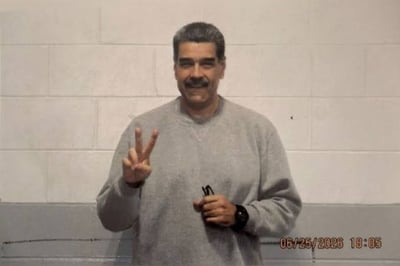
A striking visual update from inside an American detention facility has captured global attention as the deposed leader of Venezuela broke months of public silence. Nicolas Maduro, currently held in federal custody in Brooklyn, New York, released photographs showing him dressed in a standard grey prison tracksuit and flashing victory signs with both hands. The images offer the first direct look at the former leader since he and his wife were taken into custody during an overseas military operation. In an accompanying message addressed to his supporters and family, the detained former president insisted that his spirit remains unbroken despite his ongoing confinement.
The message shared alongside the photographs carried a deeply personal tone aimed directly at his domestic followers and extended family. Expressing affection for his grandchildren and supporters across South America, the former leader characterized the photographs as a small gift of hope and resilience. He stated that he remains calm, strong, and confident in his faith, assuring his loyalists that their home nation would eventually rise again. Observers noted that he appeared noticeably leaner than in his previous public appearances, reflecting the stark physical transition from running a sovereign nation to living inside the regimented confines of a high-security detention facility.
Life inside the federal detention complex has imposed strict daily limitations on the former head of state. Cut off from public internet access and daily newspapers, the detained leader spends his days in relative isolation, dedicating much of his personal time to reading and religious study according to statements from his family. Under standard facility rules, he is granted approximately three hundred minutes of telephone communication per month to speak with his defense attorneys and immediate relatives, with each individual call strictly capped at fifteen minutes. His legal defense team continues to prepare for extensive court proceedings, with a federal court in New York scheduling the formal trial to begin on June 1, 2027.
The release of the images comes at a moment of profound political and economic realignment across Latin America. Just hours before the photographs circulated publicly, interim Venezuelan President Delcy Rodriguez moved forward with a historic energy framework that dramatically alters the management of the nation’s vast natural resources. Governing under severe economic strain and international pressure, the interim administration in Caracas has chosen a path of direct engagement with Washington, seeking to revive foreign investment and rebuild an economy that suffered years of crippling shortages and industrial paralysis.
Under the newly announced bilateral energy arrangement, international operators and American partners will gain unprecedented operational access to seventeen major oilfields across the Orinoco belt and surrounding basins. The agreement grants the United States government and commercial partners a fifty-five percent share in effective crude output, with rights to purchase oil at production cost to replenish strategic stockpiles and support international operations. Venezuelan officials project that the multi-decade agreement could attract up to one hundred billion dollars in direct foreign capital, providing vital revenue to rebuild the nation’s crumbling public infrastructure and medical systems.
The sudden contrast between the imprisoned former president and the sweeping energy diplomacy in Caracas illustrates the rapid geopolitical transformation underway. While the deposed leadership remains locked in legal battles thousands of miles away, the government in Caracas is actively dismantling long-standing trade barriers to reposition the country as an open global energy supplier. The interim leadership has defended these sweeping concessions as a practical necessity, arguing that revitalizing dormant oil wells represents the only viable path toward generating public revenues and stabilizing the national currency.
The dramatic capture that brought the former leader to New York unfolded when United States special forces conducted a coordinated operation in Caracas. Federal prosecutors subsequently unsealed formal indictments charging the deposed leader and his wife, Cilia Flores, with conspiracy involving narcotics trafficking and firearms possession. Both individuals have consistently denied all criminal accusations, maintaining through their legal counsel that the charges are politically motivated and legally illegitimate under international law.
The appearance of the prison photographs on Sunday, August 30, 2026, quickly triggered intense discussion across social platforms and diplomatic circles worldwide. Digital metadata attached to the files indicated that the images were originally recorded on June 25, shortly after powerful earthquakes caused widespread destruction across northern Venezuelan provinces. The delayed publication of the images underscores the calculated timing of the release, designed to rally domestic support precisely as the interim government executes historic agreements with international partners.
For citizens across Venezuela, the simultaneous emergence of the prison images and the major resource deals has stirred deeply divided emotions. Longtime supporters view the former leader’s defiant stance as a symbol of endurance against foreign pressure, holding rallies and sharing his messages across community networks. Conversely, business leaders, independent economists, and reform advocates argue that the nation must move decisively beyond past political confrontations to repair damaged supply chains, restore reliable electrical grids, and curb hyperinflation through international commerce.
As legal preparations continue ahead of the scheduled federal trial in New York, the political landscape in Caracas continues to evolve rapidly. The emergence of the photographs serves as a vivid reminder of the dramatic shifts reshaping the Western Hemisphere, where personal political fates remain sharply disconnected from the high-stakes economic negotiations determining the country’s future.