
Jammu And Kashmir Statehood Battle Reaches New Delhi As Omar Abdullah Confronts PM Modi Over Promised Restoration
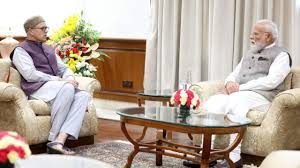
The long running political standoff regarding the administrative status of Jammu and Kashmir reached a crucial juncture when Chief Minister Omar Abdullah held a formal, high stakes meeting with Prime Minister Narendra Modi in New Delhi. The significant meeting took place on the sidelines of the 11th Governing Council meeting of NITI Aayog, marking a critical moment since the regional government took office. Abdullah utilized this direct communication channel to strongly convey the deep aspirations of the people of Jammu and Kashmir, explicitly demanding the early return of full statehood to the Union Territory. Since the historical realignment of August 5, 2019, which downgraded the historic state into a Union Territory and severed Ladakh, the promise of restoration has remained a highly sensitive domestic issue. Abdullah argued that returning full statehood is not merely a political concession but an indispensable statutory step required to strengthen local democratic institutions, deepen public participation, and secure long term administrative stability.
Beyond the overarching constitutional dispute, the Chief Minister submitted a detailed multi sector development memorandum to the Prime Minister, seeking extensive financial intervention from the central exchequer. The economic landscape of the region faces immediate challenges, specifically concerning infrastructure bottlenecks and upcoming transit disruptions. Abdullah drew the attention of the Prime Minister to the critical necessity of accelerating train services on the Udhampur to Srinagar rail line, a matter made highly urgent by the impending 16 day complete closure of the Srinagar International Airport scheduled for runway repairs in October 2026. This infrastructural freeze coincides directly with the peak of the local apple harvest season, threatening the financial survival of thousands of regional fruit growers and trade artisans. The discussion also covered key regional developmental priorities, including securing central policy support to fully harness the massive unutilized hydropower potential of the Union Territory, expanding traditional MSME incentives, and financing new tourism circuits to stabilize the local service economy.
The timing and tone of this high level interaction showcase a complex exercise in political tightrope walking by the ruling National Conference leadership. Just days prior to this meeting, the party high command announced a comprehensive strategy to stage a major public protest at Jantar Mantar in New Delhi on the opening day of the upcoming Monsoon session of Parliament. This planned agitation, designed to demand constitutional guarantees and statehood, put immense pressure on Abdullah to demonstrate concrete progress to a increasingly restless domestic voter base. By publicly congratulating Modi on achieving the landmark of completing 12 uninterrupted years in office while simultaneously coordinating street protests, the regional executive is attempting to maintain a delicate balance. The reliance on polite bureaucratic diplomacy and verbal appeals highlights the stark reality of the post 2019 administrative framework, where a regional Chief Minister remains heavily dependent on central clearance for even basic financial survival and infrastructure deployment.
This unfolding political dynamic indicates that soft diplomatic requests alone are unlikely to alter the rigid central policy regarding Jammu and Kashmir. While the central administration has repeatedly stated on the floor of Parliament that statehood will be restored at an appropriate time, the continued delay creates a perception of strategic hesitation to cede real legislative power back to the local assembly. The upcoming Monsoon session protest organized by the National Conference will serve as a critical test of whether regional political entities can successfully mobilize national public opinion to force a concrete legislative timeline from the central government. For true economic recovery and political normalcy to take root, the region requires binding structural guarantees rather than temporary infrastructure packages. Until the fundamental question of constitutional status is resolved through a definitive legislative act, meetings between regional leaders and central authorities will continue to serve as tactical maneuvers rather than permanent solutions to the structural crisis.