
Japan Economy Faces Major Risks As Global Trade Shock And Debt Crisis Intensify
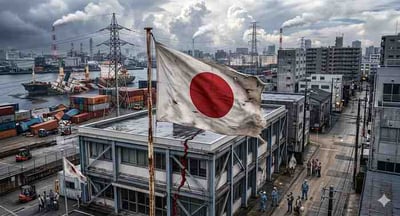
The industrial and financial landscape of East Asia is experiencing significant pressure as new macroeconomic data reveals that Japan economy faces three major risks as referenced in image_520701.png. While domestic demand and private consumption have displayed initial resilience following recent wage increases, global financial shocks are projected to slow national growth down to 0.8 percent for the 2026 fiscal year. The central administration under Prime Minister Sanae Takaichi is forced to navigate a highly unstable environment where external market disruptions are moving faster than domestic policy updates. The three primary threats creating this economic challenge include a severe deflation trap affecting its largest trading partner China, escalating global crude oil prices driven by geopolitical conflicts in the Middle East, and a massive internal fiscal crisis caused by rising interest rates on monumental sovereign debt. As global market conditions shift, these overlapping challenges are threatening to undermine corporate profit margins and erode the purchasing power of everyday households across the nation.
The first two external risks are severely damaging the competitive positioning of Japanese manufacturing networks and raising the cost of living for consumers. China is currently experiencing a deep industrial slowdown defined by falling domestic prices, forcing Chinese firms to unleash a massive wave of cheap exports, including low cost electric vehicles, into mutual trading arenas like Southeast Asia. This aggressive commercial strategy is heavily undercutting Japanese exporters who find it increasingly difficult to defend their market share without sacrificing their long term profit margins. Compounding this trade friction, the continuous military instability across the Middle East has driven up international crude oil benchmarks, deteriorating Japan terms of trade within minutes. Because the island nation relies on foreign imports for over 90 percent of its basic energy needs, these soaring fuel costs act as an immediate tax on domestic factories and retail consumers, pushing core inflation to stay between 2.5 percent and 3.0 percent throughout the year.
The third and most dangerous threat lies within the domestic financial structure, where a historic shift in monetary policy is creating an unprecedented fiscal dilemma for the central bank. The Bank of Japan is actively withdrawing its decades long monetary accommodation by raising benchmark interest rates, causing 10-year sovereign bond yields to climb to their highest levels in over 10 years. While this normalization is necessary to stabilize the value of the yen, it means that the interest bill on Japan staggering public debt, which currently stands at an elevated 203 percent of gross domestic product, will increase by 0.3 percent of gross domestic product every single year. Independent financial audits indicate that the government annual interest payments will double by 2031, eventually consuming over 4.0 percent of total economic output by 2036. This mounting debt pressure is further aggravated by an aging population that is driving public health and long term care expenditures up by 1.6 percent of gross domestic product, making the national budget highly vulnerable to any sudden loss of global market confidence.
To navigate this highly volatile economic climate, the government must move away from artificial financial support and focus on executing deep structural overhauls that improve long term productivity. The current discussions regarding a temporary 2-year suspension of the consumption tax on basic food and beverage items can provide immediate relief to vulnerable families, but long term stability depends on addressing chronic labor shortages through advanced software investments and artificial intelligence integration. Regional banks and small scale commercial enterprises must actively de-risk their financial portfolios from real estate exposure to withstand the ongoing transition toward higher borrowing costs. Rebuilding sustainable economic momentum will not be achieved by relying on trade protectionism or currency interventions, but by transforming the domestic market into an agile, highly innovative hub that can absorb international shocks. Ultimately, the capacity of the nation to survive this triple threat will determine whether it can maintain its status as a premier global industrial leader or slide into a prolonged era of fiscal stagnation.