
Kerala Free Bus Travel Scheme For Women Announced By New UDF Cabinet Facing Huge KSRTC Financial Deficit
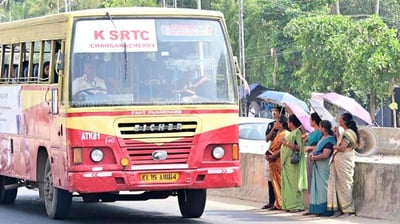
The political landscape of Kerala has entered a dynamic phase following the swearing in of the new United Democratic Front administration under Chief Minister V D Satheesan. In its historic first Cabinet assembly held in Thiruvananthapuram, the leadership moved swiftly to fulfill one of its primary election promises under the Indira Guarantee banner, declaring free bus travel for all women passengers on the state run Kerala State Road Transport Corporation fleet effective from June Fifteen Two Thousand Twenty Driven. While the welfare announcement was widely welcomed by thousands of daily female commuters, domestic workers, and college students as a massive relief against rising household expenses, structural challenges emerged within hours of the public declaration. The state transport corporation has historically functioned as a highly loss making entity, struggling for decades to sustain regular operations without massive financial interventions from the state treasury. The sudden complete elimination of ticket revenue from women passengers, who statistically constitute nearly half of the daily passenger base, threatens to push the public utility into an unprecedented operational crisis before the policy is even officially rolled out.
The primary obstacle confronting the ambitious welfare scheme is the devastating financial health of the state transport corporation combined with a shrinking operational infrastructure. According to recent internal data obtained through a gender ticketing study, the public utility generates a daily ticket revenue of approximately seven point fifty three crore rupees, out of which nearly four crore rupees is contributed directly by female commuters. By making this segment entirely free, the state government will have to heavily subsidize the corporation to cover the immediate daily deficit. Over the past decade, the previous administration had already pumped in over fourteen thousand crore rupees simply to cover basic employee salaries, operational costs, and the pensions of forty three thousand retired personnel. Furthermore, the actual physical capacity of the public fleet has drastically shrunk over the years, operating just around four thousand buses compared to the massive private sector network that runs nearly seven thousand vehicles. Out of the existing state owned vehicles, more than one thousand two hundred buses have already crossed the fifteen year operational limit, making fleet expansion and regular maintenance a massive uphill task for the incoming transport ministry.
In addition to the internal institutional deficit, the policy has triggered intense institutional resistance from the private transport sector across the state. The Kerala State Private Bus Operators Federation has openly opposed the unilateral implementation of the scheme, warning that an uncompensated shift of female commuters toward state run services could force hundreds of private operators completely off the roads. Industry representatives emphasize that nearly sixty percent of a private operator daily earnings goes directly toward escalating diesel expenditures, and because women form the vast majority of short distance rural commuters, their sudden departure would render private routes financially unviable. The private owners have demanded that the state administration address their survival concerns or include private operators within a comprehensive government compensation model to prevent a total collapse of the rural public transport network. This external friction places the new Cabinet in a highly difficult position, as forcing private operators into losses could accidentally reduce total transport availability for the public.
From a critical perspective, this swift confrontation highlights the structural vulnerabilities that emerge when extensive election guarantees face immediate fiscal realities in a cash strapped state. While the ruling alliance successfully replicated a popular transport model seen in neighboring states to secure a definitive mandate, executing it within a heavily indebted corporation requires deep systemic stabilization rather than simple administrative decrees. The decision of the Chief Minister to simultaneously commission a comprehensive white paper on state finances demonstrates an early awareness of these immense structural liabilities. To prevent the free travel initiative from turning into an unsustainable burden, the administration must move past competitive welfare announcements and focus on comprehensive structural changes, corporate formalization, and strict regulatory clarity. The unfolding dispute proves that creating inclusive public welfare systems is deeply vital for social development, but their long term survival depends entirely on building a solvent, highly efficient infrastructure rather than relying on debt driven political promises.