
Kitno Ko Arrest Karoge Amit Shah As CJP Leader Abhijeet Dipke Warns Entire Nation Is Coming To Delhi For Mega Protest
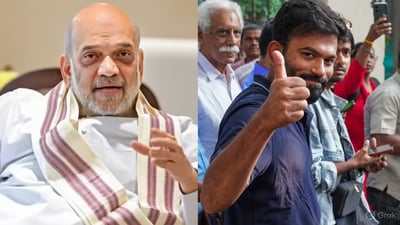
A sharp political face-off between student organizers and the central government has ignited in the national capital ahead of planned street demonstrations. The political atmosphere grew intensely heated after Cockroach Janta Party founder Abhijeet Dipke issued an open and defiant challenge directly to Union Home Minister Amit Shah. Dipke warned that attempting to crush public anger through police detentions will fail because citizens from every corner of India are preparing to march into the capital. The direct verbal counter-attack came right after youth leaders received information suggesting that top organizers could be detained ahead of a massive demonstration organized against the election machinery.
The warning followed statements from core youth leaders who revealed that the state machinery was planning coordinated action to arrest prominent organizers. Platform co-founders Saurav Das, Ashutosh Ranka, and Ratna Singh indicated that authorities were preparing to take them into custody to derail upcoming street agitations. In widely circulated messages, the young leaders warned the government that relying on high-handed security measures would prove to be a grave political blunder. They told their followers that the younger generation has fully awakened and will not be intimidated by police vans or prison threats, asking citizens everywhere to keep the agitation alive whether leadership figures remain free or behind bars.
The escalating friction stems from nationwide anger directed at the leadership of the Election Commission of India. Youth groups, civil society coalitions, and opposition parties have demanded the immediate resignation of Chief Election Commissioner Gyanesh Kumar over disputed changes to statutory election forms and voter roll revisions. Frustration boiled over during the Special Intensive Revision drive, which saw massive deletions of legitimate voters, followed by altered formats in voter verification paperwork. When the Supreme Court of India publicly denied having ever approved modifications to statutory Form 6, public resentment shifted rapidly from online discussions into direct, angry protests across major urban centers.
The current friction comes on the heels of intense confrontations in New Delhi, where police officers detained around one hundred and twenty demonstrators during weekend rallies. Security personnel set up iron barricades near key central intersections, leading to intense pushback as students attempted to reach administrative buildings. Civil rights groups voiced deep outrage after videos captured police officers operating without required name badges while detaining young protesters, including several female university students. Rather than scaring people away, the heavy police reaction generated wide sympathy and motivated student groups to plan even larger gatherings.
The movement has also established strong roots beyond the capital city. In Mumbai, thousands of people assembled at Shivaji Park to hold a large rally calling for complete transparency in the electoral roll process and demanding the exit of the election chief. The large turnout in western India proved that concerns over voter list manipulation and institutional independence are shared by citizens across state borders, transforming what began as a regional grievance into a genuine nationwide agitation.
Youth leaders have made it clear that threats of preventive custody will only push more ordinary citizens onto the streets. Organizers pointed out that the government seems completely focused on protecting a questioned election official while ignoring the legitimate concerns of registered voters. They stressed that no democratic administration can sustain itself by using criminal laws against young citizens demanding fair elections, promising that the upcoming demonstration will deliver the largest youth mobilization the country has seen in years.
This planned mass assembly represents the second major standoff led by student platforms at Jantar Mantar in recent months. Earlier, young agitators held a prolonged sit-in over examination paper leaks and university issues, an agitation that cooled only after significant ministerial resignations. Remembering that victory, student organizers believe that firm, continuous, and peaceful street action is the only proven method to ensure democratic accountability and protect voting integrity for future generations.
With the capital placed under heightened security surveillance, the confrontation between student activists and the Union government has reached a delicate turning point. Political analysts observe that using police forces against popular youth movements often triggers broader public anger, pulling working families into street politics. The nation now waits to see whether the government will initiate dialogue over the disputed election rules or maintain its hardline stance as thousands of young citizens prepare to arrive in the national capital.