
Kyiv Missile Barrage Kills Seventeen as Russian Forces Exploit Critical Ukrainian Air Defense Shortages
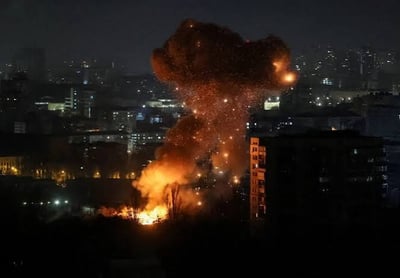
Suburban streets around Kyiv turned into scenes of chaos early Wednesday morning as a sudden combined barrage of Russian ballistic missiles and long range drones struck major civilian distribution hubs, commercial centers, and transportation infrastructure. The overnight assault claimed at least seventeen lives and left forty four individuals wounded across the capital region, marking one of the most devastating single air strikes against the Ukrainian metropolis in recent months. Panic unfolded rapidly across several suburban districts as air raid sirens sounded just minutes before powerful detonations shook the skyline. In the suburban town of Brovary, initial rescue reports confirmed eight deaths at a local railway platform facility, while three workers perished at a major sorting complex operated by the private delivery firm Nova Poshta. Logistics workers and international freight drivers described fleeing from blast waves that tore through commercial storage yards, leaving burning vehicle fleets and destroyed cargo facilities in their wake. Emergency crews worked continuously throughout the morning to clear smoking rubble and search for survivors caught under collapsed metal structures.
The severe loss of life has drawn renewed international attention to a glaring operational vulnerability facing Ukrainian military commanders. Ukrainian President Volodymyr Zelenskyy confirmed that local air defense batteries failed to intercept any of the twenty four incoming ballistic missiles launched by Russian forces during the attack. Ukrainian officials explained that defense units have run out of vital interceptor ammunition designed specifically for the United States manufactured Patriot system. The Patriot system remains the single ground based weapon platform in the Ukrainian inventory capable of tracking and neutralizing advanced high speed ballistic projectiles. Zelenskyy publicly stated that available stocks of anti ballistic interceptors have reached critically low levels, largely due to supply chain strain and shifting international focus following military developments across West Asia. The Ukrainian leader stressed that delays by foreign allies in delivering specialized defense hardware translate directly into widespread civilian destruction, noting that adequate supplies of interceptor missiles could have prevented the tragedy entirely.
Military analysts noted that the strike pattern clearly demonstrates how Russian forces are modifying their air campaign strategies to exploit known gaps in Ukrainian radar and missile defense coverage. Ukrainian defense officials reported that the overnight barrage combined twenty four ballistic missiles with four hypersonic or supersonic cruise weapons and more than one hundred fifteen jet powered attack drones. The simultaneous arrival of fast moving ballistic threats alongside massive drone waves overwhelmed automated tracking networks, granting civilian populations virtually no warning time to reach safety. The targeted locations included commercial food storage facilities, construction material warehouses, retail distribution networks, and a regional brewing facility. While Ukrainian authorities emphasized that the hit locations carried purely civilian economic functions, the Russian Defense Ministry issued a formal statement claiming its forces executed precision strikes against logistical networks handling military equipment, uncrewed aerial vehicle components, and electronic warfare hardware.
Simultaneously, Ukrainian defense forces executed long range retaliatory strikes targeting energy and commercial hubs inside Russian territory. Ukrainian uncrewed aerial vehicles struck a large logistics warehouse belonging to the major Russian online retailer Wildberries in the Tula region south of Moscow. The strike marked the fourteenth major storage complex owned by the retail corporation to catch fire over the past three weeks, highlighting Ukraine continuing strategy of targeting domestic supply networks to pressure Russian economic stability. The Russian Defense Ministry reported destroying hundreds of incoming Ukrainian drones across sixteen internal border regions and maritime zones, signaling an expansion of long range aerial warfare between both nations. Despite high level political discussions and international diplomatic efforts to establish ground rules for a potential ceasefire, active hostilities continue to escalate along frontline positions and distant urban centers alike.
The tragedy across the Kyiv region highlights the immense human price paid by civilian communities during sustained infrastructure warfare. Local government leaders and human rights advocates have called for immediate international intervention to replenish defensive inventories before additional civilian centers suffer similar destruction. Freight companies and economic analysts warn that sustained aerial bombardment of civilian logistics hubs threatens to undermine basic retail supply chains across central Ukraine, complicating daily living conditions for millions of non combatant residents. As families in Brovary and Kyiv mourn the victims of the latest strike, the regional administration continues to coordinate emergency housing and financial assistance for displaced workers. The incident stands as a stark reminder that as long as interceptor stocks remain depleted, major European population centers will remain dangerously exposed to high speed missile strikes.