
Strait of Hormuz Reopening Deal Near as Trump Signals Progress and Iran Oman Talks Enter Critical PhaseStrait of Hormuz Reopening Deal Near as Trump Signals Progress and Iran Oman Talks Enter Critical PhaseStrait of Hormuz Reopening Deal Near as Trump Signals Progress and Iran Oman Talks Enter Critical PhaseStrait of Hormuz Reopening Deal Near as Trump Signals Progress and Iran Oman Talks Enter Critical Phase
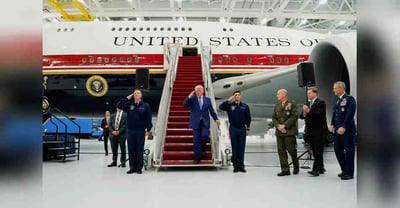
The diplomatic landscape across West Asia experienced a significant shift on Wednesday as United States President Donald Trump signaled that a major deal to reopen the strategically vital Strait of Hormuz could be reached within twenty four to forty eight hours. Speaking to journalists during official travel, the American president noted that substantial progress had been made in international negotiations aimed at ending the crippling maritime blockade that has paralyzed global energy shipping for months. The breakthrough follows an intense flurry of regional mediation led by Oman and Qatar, which prompted the United States administration to temporarily suspend planned military strikes against Iranian infrastructure. The critical waterway, which typically handles nearly twenty percent of global oil and liquefied natural gas shipments, became a central battleground following the onset of direct military conflicts earlier this year. With global energy markets reacting sharply to supply disruptions and rising fuel costs, international observers view the impending agreement as a vital first step toward de-escalating broader regional hostilities.
At the heart of the emerging diplomatic framework is a dedicated maritime arrangement being negotiated directly between officials in Tehran and Muscat. Under the proposed bilateral agreement, commercial vessels entering the Persian Gulf would navigate through an Iranian-administered maritime corridor, while outbound traffic would utilize a designated lane managed by Oman. Iranian Foreign Ministry spokesperson Esmail Baghaei confirmed that discussions with Omani representatives were focused on establishing safe, structured shipping channels that respect national sovereignty while addressing mutual security requirements. While regional diplomats express optimism regarding the operational blueprint, fundamental disagreements remain concerning maritime administration and traffic oversight. United States officials, including Secretary of State Marco Rubio, have reiterated that Washington will not sanction any final mechanism that yields permanent unilateral control of international waters to Tehran. Despite these lingering policy divergences, global financial markets responded positively to news of diplomatic traction, with international crude oil benchmarks experiencing an immediate price reduction.
President Trump outlined a broader two-stage diplomatic framework intended to resolve the wider conflict, characterizing the reopening of the Strait of Hormuz as the essential initial phase before addressing comprehensive security issues. According to statements from the White House, subsequent phases of negotiations will focus directly on Iran nuclear capabilities and verifiable regional security guarantees. Trump emphasized that while military assets remain positioned across the region, Washington chose to pause kinetic operations following direct appeals from regional leaders who reported that key agreement parameters had been established. The decision reflects growing domestic and international pressure on the United States administration to mitigate economic fallout, stabilize energy prices, and reduce global supply chain volatility ahead of upcoming legislative elections. Simultaneously, regional leaders such as Qatar Emir Sheikh Tamim bin Hamad Al Thani have intensified direct phone diplomacy with Washington, urging all participating nations to bridge remaining gaps in pursuit of a durable peaceful settlement.
Despite promising diplomatic progress in the Persian Gulf, security conditions across adjacent maritime corridors remain extremely volatile. In the Red Sea, Iran-backed Houthi forces in Yemen launched a series of missile attacks targeting a Saudi Arabian oil tanker off the coast of Yanbu, marking an extension of their declared regional blockade. The escalation in the Red Sea has forced major shipping entities to reroute tankers toward alternative regional ports, placing an additional strategic burden on narrow waterways connecting the Indian Ocean to the Mediterranean Sea. Farther south, an Indian-flagged commercial vessel sank off the coast of Yemen after being struck by an explosive-laden remote craft, necessitating an emergency rescue operation by local coast guard units that saved thirteen Indian crew members. These simultaneous maritime incidents underscore the fragile security environment, demonstrating that even as high-level talks advance regarding the Strait of Hormuz, auxiliary proxy conflicts continue to threaten commercial shipping lanes and international trade security.
The potential breakthrough in negotiations comes at a critical historical juncture for both Western powers and Middle Eastern nations seeking an exit from months of economic strain and military confrontation. United Nations officials and international human rights organizations continue to monitor the broader humanitarian fallout, urging all combatants to prioritize civilian safety and facilitate the uninterrupted delivery of commercial goods. If finalized, the proposed Hormuz transit agreement would establish unprecedented operational guidelines for shared maritime security, potentially serving as a structural template for future regional conflict resolution. However, analysts warn that the implementation phase will require rigorous compliance verification and sustained diplomatic goodwill from all involved parties. As the crucial window for a final announcement approaches, global governments, energy producers, and maritime logistics companies remain focused on West Asia, waiting to see whether diplomatic negotiations will successfully restore open passage through the world most sensitive energy choke point.