
Land Will Always Belong to Waqf Said Supreme Court Verdict News: Court Limits Tribunal Overreach!
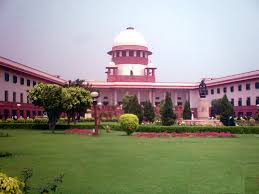
The phrase "land will always belong to waqf" has been a central point of discussion in legal circles following the recent Supreme Court verdict news. The court was asked to decide whether the "Waqf Tribunal"—a special court for religious property—has the power to decide cases for land that isn't even registered as a Waqf property. The highest court in the land ruled that while the religious nature of a property is permanent once established, the Tribunal only has jurisdiction over properties that are already formally listed. This means the Waqf Board cannot bypass regular civil courts to claim a piece of land unless they have the official registration papers to prove it.
This ruling is a major step toward making land ownership laws more fair and transparent. In many past cases, the Waqf Board would claim a property based on "historical use," and the owners would be forced into a long battle in a specialized religious court. This often felt like an unfair fight for private citizens. By insisting that only registered land falls under the Tribunal's power, the Supreme Court has protected the "due process" of law. It ensures that if there is a dispute over whether a land is private or religious, a regular civil court will be the one to decide the facts based on the standard laws of the land.
Looking at the impact, this verdict balances the rights of religious trusts with the rights of individual citizens. While it is important to protect religious land from being stolen, it is equally important to make sure that the law isn't used to make arbitrary claims on private homes. The court is basically saying that "registration is the proof of intent." If a property was meant to be for public or religious use, it should have been documented. This evaluation of the law prevents "jurisdictional overreach," where a specialized body tries to take over the work of the general legal system without proper documentation.
The long-term effect of this decision will be a reduction in unnecessary litigation. It forces the Waqf Board to be more organized and follow the same rules of evidence as everyone else. For the common man, it provides a "shield" against sudden claims on their ancestral property. It also sets a clear path for how these disputes should be handled in the future, making the legal system faster and more predictable. As the country moves toward digitizing land records, this judgment ensures that the law keeps pace with the need for clear, documented ownership. It is a win for the principle that every citizen is equal before the law.