
Maharashtra Advocate Files Police Complaint Against Abhijeet Dipke and CJP Activists Over Shivaji Park Demonstration
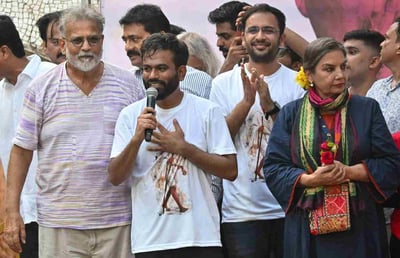
Legal trouble has surfaced for the organizers of the mass youth gathering held in central Mumbai as a local lawyer stepped forward to register a formal police complaint. The complaint targets Abhijeet Dipke, the founder of the youth organization known as Cockroach Janta Party, along with other key coordinators who led the massive demonstration. The public protest was organized to demand the immediate resignation of Chief Election Commissioner Gyanesh Kumar over alleged issues in voter list updates. The legal grievance highlights that the gathering was held without valid administrative permissions, causing widespread inconvenience and disruption to neighborhood families.
The complaint was submitted at the Shivaji Park Police Station by advocate Siddhi Deolekar, who lives in the residential neighborhood facing the ground. The legal professional explained that local residents faced severe disturbance throughout the day due to road blockages, unauthorized loudspeaker announcements, and unmanageable crowds. The complainant pointed out that while every citizen in a democracy enjoys the constitutional right to express disagreement peacefully, such activities must strictly follow established public guidelines and be conducted at designated protest venues rather than inside quiet residential streets.
In her statement given to local authorities, the advocate noted that the High Court had already laid down specific guidelines regarding the use of Shivaji Park as a designated silence zone. She pointed out that earlier judicial directives had made it clear that public thoroughfares and quiet residential spaces should not be taken over for political agitations. She emphasized that designated protest grounds like Azad Maidan are available in the city for people wishing to raise political demands, questioning the decision to gather outside residential apartment buildings without administrative consent.
The legal action follows days of administrative tension leading up to the public demonstration. Mumbai Police had earlier rejected the formal application submitted by the organizers seeking permission for the rally. Authorities had cited major traffic congestion, excessive sound levels, and overall public safety in the bustling Dadar neighborhood as valid grounds for denying clearance. In response to the official denial, the youth organizers had announced an agitation where volunteers volunteered to face detention peacefully, calling it a collective movement for civic rights.
Parallel to the private complaint lodged by the neighborhood lawyer, the Mumbai Police initiated its own legal action against the organizers and hundreds of unidentified participants. Police officials registered a First Information Report covering charges of unlawful assembly, obstruction of public roads, disobedience of lawful administrative orders, and illegal operation of powerful loudspeaker systems near the park gates. Investigative teams have also secured video recordings from surveillance cameras placed across the Dadar junction to identify individuals who led the street obstruction.
The demonstration held on October 2 had gained massive public visibility across the state because several prominent artists, writers, and cultural icons joined hands with the youth group. Legendary actor Naseeruddin Shah, music director Vishal Dadlani, actress Shabana Azmi, and civil society representatives stood together with the young leaders. The central point of their agitation was the controversial Special Intensive Revision of voter rolls conducted by the Election Commission, which the organizers claimed had removed thousands of genuine voter names without adequate public notice.
The complainant praised the local police department for maintaining calm and offering reassurance to families living in the surrounding apartment buildings. She mentioned that several nearby residents had reached out to the police control room seeking protection and assistance as heavy crowds swarmed the inner streets. The resident expressed hope that the authorities will carry out a thorough inquiry and ensure that unauthorized demonstrations do not disrupt peaceful neighborhoods in the future.
Organizers associated with the Cockroach Janta Party stated that their fight is completely focused on saving fundamental voting rights for ordinary people. They maintained that their assembly was completely peaceful and non-violent, driven by legitimate public concern over democratic processes. As police officials begin recording official statements and examining the legal merits of the complaint, the dispute adds another contentious chapter to the widening debate between citizen protest rights and civic order in the city.