
Massive Electoral Roll Cleansing Removes Nearly 24 Lakh Voter Names Across Four States and One Union Territory
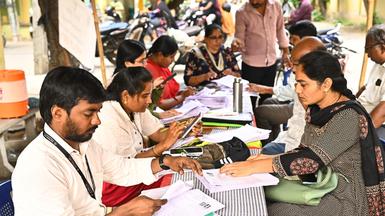
A monumental administrative shift has shaken the democratic landscape of India as the Election Commission of India officially released its updated draft electoral rolls. The comprehensive verification drive has resulted in the sudden deletion of nearly 6.4 percent of all registered voters across 4 states and 1 Union Territory undergoing a thorough cleanup operation. According to official statistical datasets published on July 11 2026 a massive total of 2382014 voter names were permanently purged from the registry lists. The affected areas encompass the states of Odisha, Manipur, Mizoram, and Sikkim alongside the combined Union Territory of Dadra and Nagar Haveli and Daman and Diu. This massive demographic contraction took place under the strict guidelines of the third phase of the Special Intensive Revision process which aims to eliminate system errors and duplicate entries before future legislative assemblies go to the polls.
The detailed breakdown of regional data reveals a highly uneven distribution of voter list deletions that points toward specific geographic and socioeconomic challenges. The small western Union Territory of Dadra and Nagar Haveli and Daman and Diu witnessed the highest relative impact with an unprecedented 30 percent of its entire electorate being erased. Out of 428000 original voters more than 126000 citizens were omitted primarily because local Booth Level Officers were unable to trace their physical addresses or collect required enumeration documents. In contrast Odisha registered the highest absolute numbers where authorities removed a staggering 2012000 names from an initial database of 3.33 crore people representing a clear 6 percent deletion rate. Meanwhile the conflict affected state of Manipur recorded a 7.5 percent deletion rate with 158000 names dropped while Mizoram saw the lowest overall proportional reduction at 5.2 percent which effectively removed 46162 individuals from the system.
A deeper analysis of the operational execution reveals that while administrative cleanup is necessary for democratic hygiene the rapid exclusion of millions of names can easily result in systemic voter disenfranchisement. The official justifications provided by the Election Commission attribute the vast majority of deletions to natural factors such as voter deaths, permanent internal migration, and duplicate registrations across multiple constituencies. For instance Odisha lost 8.32 lakh names due to confirmed deaths and another 10.07 lakh due to permanent occupational migration to urban industrialized hubs. However the reality that 96199 voters in a single Union Territory were dropped simply because field officials could not trace them highlights a profound structural vulnerability in rural outreach. This massive digital and manual exclusion has already drawn intense scrutiny from United Nations Special Rapporteurs who raised serious humanitarian concerns regarding how automated data models might inadvertently target displaced tribal minorities and marginalized migrant laborers.
To safeguard constitutional voting rights and restore public confidence in democratic institutions the central government must establish a highly accessible correction window. The Election Commission has formally granted a strict 1 month timeline for all affected citizens to submit official claims and objections for the immediate reinstatement of their missing names before the publication of the final voter list on September 11 2026. Local district collectors are actively broadcasting public service announcements clarifying that normal citizens only need to submit identity documents if their names are completely missing from the newly published draft lists. Relying solely on a short manual grievance window puts an unfair burden on illiterate or displaced families who may only discover their lack of voting eligibility on actual election days. Moving forward the state must transition toward a transparent decentralized verification protocol that prioritizes proactive human confirmation over algorithmic exclusion ensuring that administrative efficiency never compromises the foundational right of universal adult suffrage.