
Modi Govt Increases Petrol Price Twice Within A Week After Winning Bengal And Assam Both First Hike Worth 3 Rupees Followed By Second Hike Of 90 Paise Per Litre
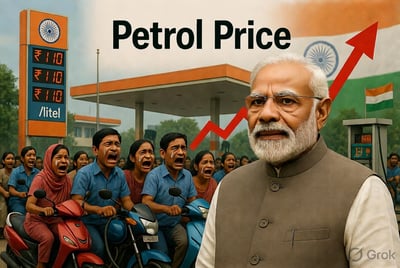
The central government has permitted a secondary increase in retail fuel prices across the country, marking the second major upward revision within a single week. Effective Tuesday, petrol and diesel rates jumped by approximately 90 paise per litre across all major distribution networks. This rapid adjustment follows closely on the heels of a massive three rupee per litre increase implemented just days prior, effectively ending a long standing multi year freeze on domestic fuel pricing updates. Interestingly, the political timing of these combined financial adjustments has sparked intense debate, as the price surges were authorized immediately after winning Bengal and Assam both in recent high stakes electoral battles. With these back to back changes, retail energy rates have surged by nearly four rupees per litre in less than a week, triggering immediate widespread anxiety regarding retail inflation and transport logistics expenses. While petroleum authorities point to external market challenges, the timing and aggressive nature of these twin revisions have caught daily commuters and small businesses entirely off guard.
The underlying catalyst for this financial escalation stems directly from extreme volatility across the international energy landscape, where benchmark Brent crude has soared past one hundred and ten dollars per barrel. Escalating geopolitical confrontations in West Asia alongside severe shipping disruptions around the critical Strait of Hormuz have squeezed global energy supplies tightly. For an economy that imports more than eighty five percent of its crude requirements, keeping domestic retail rates static was becoming financially unviable for public sector oil manufacturing corporations, who were sustaining massive daily under recoveries. While the government did secure temporary economic cushion by utilizing specific international trade sanctions waivers to import discounted crude, the absolute scale of global market pressure made a domestic price correction completely unavoidable. Critics point out that holding prices artificially stable during crucial election campaigns in key regions, only to release the burden once victory is secured, demonstrates how closely retail fuel economics are tied to political calendars. Relying heavily on artificial price freezes simply shifts the financial burden onto public balance sheets, and this sudden post election release of market pressure highlights how deeply vulnerable the local economy remains to global geopolitical shocks.
The geographical breakdown of the latest fuel price surge reveals significant regional disparities due to varying state level value added taxes and local transit levies. Among the major metropolitan centers, Kolkata recorded the steepest absolute jump, where petrol prices scaled up to one hundred and nine rupees and seventy paise per litre, while diesel climbed to ninety six rupees and seven paise per litre. In comparison, the national capital New Delhi experienced a relatively lower but still painful shift, bringing retail petrol to ninety eight rupees and sixty four paise per litre. Meanwhile, financial hub Mumbai saw its petrol retail prices cross the one hundred and seven rupees per litre mark. This uneven distribution of the tax burden means that industrial hubs located further away from coastal ports are bearing a disproportionate share of the economic strain, directly penalizing localized commercial transport networks and manufacturing setups.
The decision to execute back to back hikes within such a narrow timeframe carries severe macroeconomic risks, as fuel acts as a primary input cost for the entire domestic supply chain. Pushing these costs onto the public will inevitably trigger a cascading inflationary effect on daily essentials, vegetables, and commercial freight transport rates. While fiscal administrators argue that allowing oil marketing companies to recover their massive operational losses protects the structural health of public banking and corporate sectors, doing so at a time when retail consumption is fragile could damp down consumer spending power. The choice to delay these essential adjustments for years and then implement them abruptly creates an unstable economic environment for businesses attempting to budget long term transport costs. Moving forward, the public must brace for sustained high costs at the pumps, as energy experts indicate that further micro revisions remain highly probable if global crude values do not stabilize.